
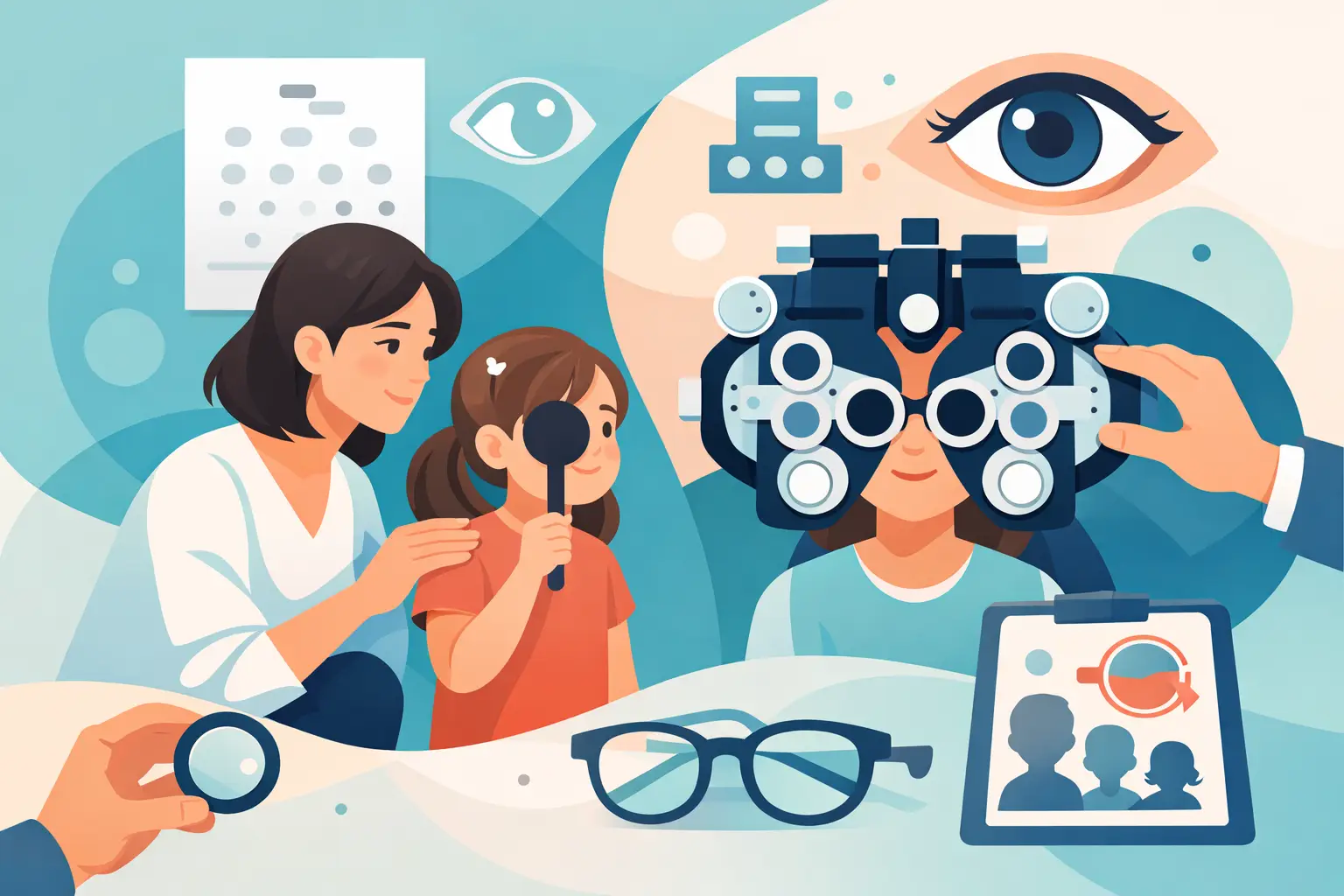
A child can pass a basic vision screen and still have an eye issue worth treating. That is why parents often ask, when should kids get eye checks? The short answer is: start early, arrange a full examination before school, and do not wait for your child to complain if something seems off.
Children rely on vision for far more than reading a chart. Clear, comfortable sight supports learning, hand-eye coordination, confidence in sport, and everyday safety. Because children may assume everyone sees the way they do, changes in vision can be easy to miss at home.
When should kids get eye checks?
Eye care begins well before a child can identify letters. Newborns usually have basic eye health checks in hospital and through routine child health appointments. These checks are valuable, but they are not the same as a comprehensive eye examination with an optometrist.
For most children, a practical approach is to arrange their first full eye examination at around three years of age, or earlier if there is a concern or a family history of eye conditions. A further check before starting school is particularly worthwhile. This is when children begin demanding more from their vision: recognising shapes and words, focusing at close range, looking from the board to their work, and joining in active play.
After that, many children benefit from an eye examination every one to two years. The right interval depends on the child. A child with healthy eyes, no symptoms and no risk factors may need less frequent review than a child wearing glasses, developing short-sightedness, or being monitored for an eye health condition.
Your optometrist can recommend a schedule based on your child’s findings rather than applying a one-size-fits-all rule.
Earlier checks can make a real difference
Do not wait until age three if you have noticed something concerning. Babies and young children should be assessed promptly if an eye appears to turn in or out, the pupils look unusual in photos, one eyelid droops, or there is persistent watering, redness or light sensitivity.
An early assessment is also sensible if your child was born prematurely, has developmental delay, has had a head injury, or has a medical condition that may affect vision. A family history of a lazy eye, eye turn, high prescription, childhood glaucoma, cataracts or inherited eye disease is another reason to check early.
Some problems are most effectively managed while a child’s visual system is still developing. Amblyopia, often called lazy eye, occurs when one eye does not develop clear vision as expected. It may be related to an eye turn or a significant difference in prescription between the eyes. Early detection gives a child the best opportunity for treatment.
Why a school vision screen is not the whole picture
Vision screening at school or during a health check can identify some children who need further care. It is helpful, but it has limits. A screening test may focus on distance vision and can miss issues with eye coordination, focusing, depth perception, colour vision or early eye health changes.
A comprehensive children’s eye examination looks beyond whether a child can read small letters. It can assess how clearly each eye sees, whether the eyes work together, how the eyes focus at close range, and whether there are signs of a prescription or eye health concern. The examination is tailored to the child’s age and confidence level, using pictures, matching cards or other child-friendly methods where needed.
A child does not need to know the alphabet to have their eyes examined. For younger children, the optometrist observes visual responses and uses age-appropriate testing to build a clear picture of their eye health and visual development.
Signs your child may need an eye check sooner
A sudden complaint of blurry vision deserves attention, but many signs are quieter. Children may compensate without realising that their eyes are working harder than they should.
Consider booking an eye examination if your child is squinting, sitting very close to the television, holding books unusually close, or moving closer to the front of the classroom to see. Frequent eye rubbing, blinking, headaches after reading, tired eyes, or avoiding close work can also be clues.
Watch for behaviours that affect schoolwork or play. Losing their place while reading, using a finger to track every line beyond the early reading years, slow copying from the board, poor concentration with near tasks, or regularly saying words appear to move may point to a vision or binocular vision issue. These signs can overlap with other learning and developmental needs, so an eye examination is one useful part of a broader conversation with your child’s teacher or GP.
Other signs need more urgent attention. Seek prompt care for eye pain, sudden vision loss, a red eye with light sensitivity, a chemical splash, an eye injury, or a new and constant eye turn. If your child has a possible eye emergency, contact an eye care professional or seek urgent medical advice rather than waiting for a routine appointment.
Myopia: why regular checks matter in primary school
Short-sightedness, also known as myopia, is becoming more common in children. A child with myopia can often see clearly up close but struggles to see distant objects, such as the classroom board, signs at school, or the ball during sport.
Myopia frequently begins or progresses during the primary school years, although it can start earlier. Genetics play a role: a child with one or both parents who are short-sighted has a higher chance of developing myopia. Time spent doing close work and limited time outdoors may also contribute.
Glasses can make vision clearer, but a myopia assessment can also consider whether the prescription is changing quickly and whether myopia control options may be appropriate. These options are not identical for every child. Age, prescription, eye health, lifestyle, willingness to use contact lenses and the rate of progression all matter.
Regular review allows changes to be identified before a child spends months struggling to see clearly. It also gives parents practical guidance about visual habits, including taking breaks from close tasks and building outdoor time into a child’s week.
What to expect at a children’s eye examination
A good children’s eye check should feel calm and unhurried. The optometrist will usually ask about your child’s visual habits, school experience, headaches, previous glasses, medical history and family eye history. Let the practice know if your child is anxious, has communication needs, or has had a difficult experience with health appointments. This helps the team adapt the visit.
Testing may include distance and near vision, eye movement and alignment, focusing ability, depth perception, and an assessment of the front and back of the eyes. Eye drops are sometimes recommended to accurately measure a child’s prescription or examine the eye health more thoroughly. They can temporarily blur close vision and make eyes more sensitive to light, so it is useful to plan a quieter afternoon afterwards.
If glasses are needed, choosing frames is part of the care. Children’s frames should fit securely, sit comfortably and suit everyday movement. The best choice is not necessarily the one with the most features. Fit, lens material, prescription and how your child will use the glasses all need to be considered.
Making eye care part of your child’s routine
Parents are often reassured to learn that a children’s examination is not only for children who are already struggling. It creates a baseline, making it easier to spot meaningful changes as your child grows.
Booking around a birthday, before starting school, or ahead of a new school year can make the timing easier to remember. Bring any current glasses and share notes from teachers if they have noticed difficulty seeing the board, reading, or concentrating during visual tasks.
At Boda Family Eye Care, children’s vision care is approached with the same thorough, family-focused attention as every other part of eye health. If you are unsure whether a behaviour is normal or worth checking, trust that instinct. A timely eye examination can offer reassurance, clear answers and practical next steps for your child.