
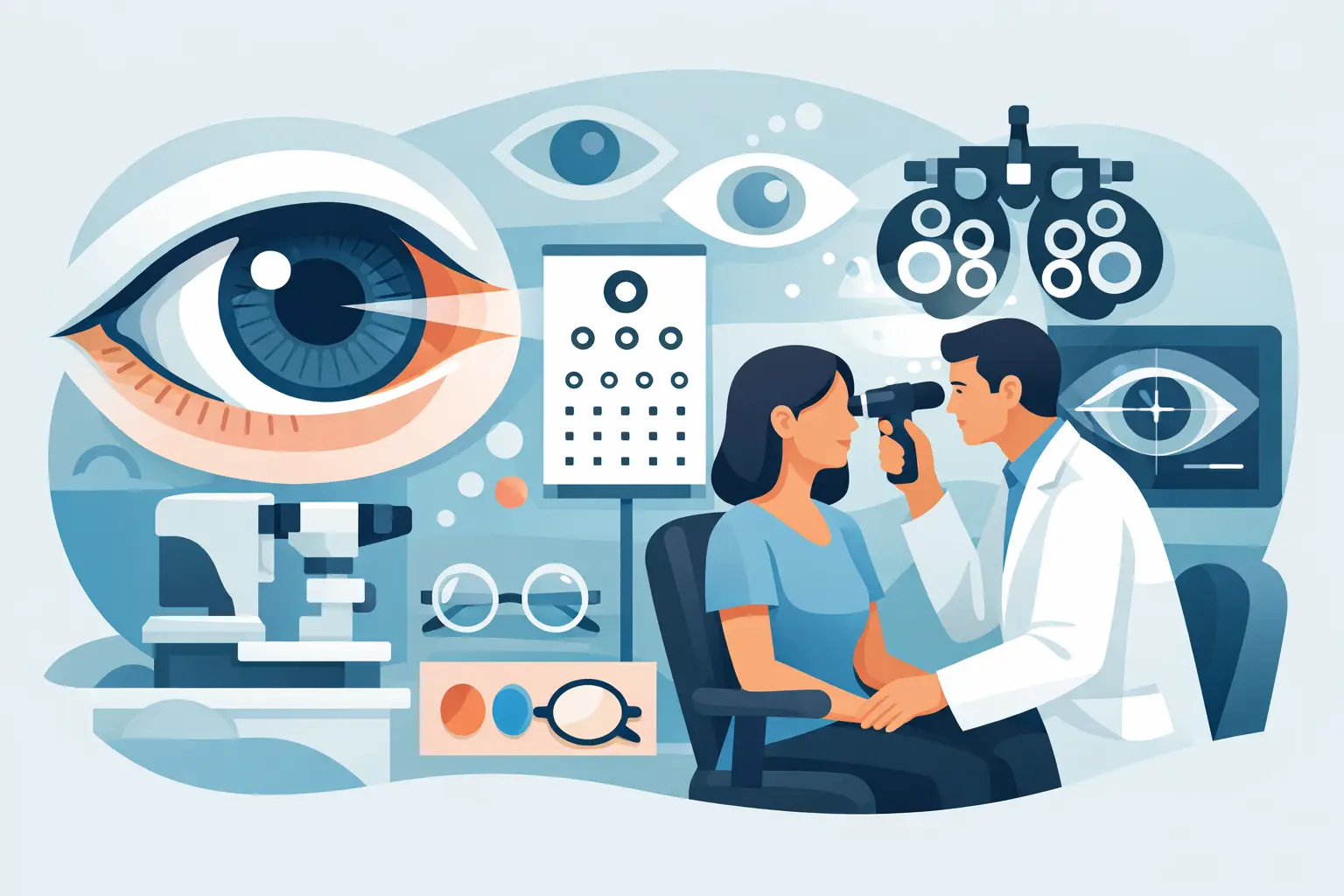
A quick read of an eye chart might tell you whether you need glasses. It does not tell the full story of your eye health. If you have ever wondered what is a comprehensive eye exam, the short answer is this: it is a thorough assessment of both how well you see and how healthy your eyes are.
That distinction matters. Many eye conditions develop gradually and without obvious symptoms at first. You can be seeing reasonably well and still have signs of glaucoma, cataracts, retinal problems, dry eye disease or diabetes-related changes. A comprehensive eye exam is designed to pick up those issues early, not just update your script.
What is a comprehensive eye exam and what makes it different?
A comprehensive eye exam is a detailed consultation with an optometrist that looks at your vision, eye health and visual function as a whole. It is different from a basic screening because it goes beyond a simple sight test.
At a screening, you might be asked to read letters from a distance and answer a few quick questions. That can be useful as a first check, but it is not enough to diagnose many conditions or explain symptoms properly. A comprehensive exam is more personalised. It takes into account your age, medical history, family history, symptoms, lifestyle and any changes you have noticed in your sight or comfort.
For some patients, the main issue is blurry vision when driving or reading. For others, it is headaches, eye strain, sore eyes, double vision, children struggling at school, or concern about a family history of eye disease. The exam is adapted to the person sitting in the chair.
What happens during a comprehensive eye exam?
The exact tests can vary, but most comprehensive eye exams include several important parts.
Your optometrist will usually begin with questions about your vision, general health, medications and any current concerns. This part is more important than many people realise. Conditions such as diabetes, high blood pressure, autoimmune disease and some medications can affect the eyes. Family history can also change how closely certain conditions are monitored.
Next comes testing of your visual acuity – in other words, how clearly you can see at distance and near. If your vision is blurred, the optometrist will assess whether glasses or a change in prescription could help. This refraction test is what determines your spectacle or contact lens prescription.
But that is only one part of the appointment. A comprehensive exam also looks at how your eyes work together. Depending on your age and symptoms, this may include assessing eye movements, focusing ability, depth perception and binocular vision. These tests can be especially important for children, students, office workers and anyone with headaches or visual fatigue.
Your eye health is then assessed in more detail. The front of the eye, including the eyelids, tear film, cornea and lens, is examined closely. This can help identify dry eye, allergies, inflammation, cataracts and other surface or internal issues. The pressure inside the eyes may also be measured, as raised pressure can be one risk factor for glaucoma.
The back of the eye is another key part of a comprehensive exam. The optic nerve, retina and blood vessels are checked for signs of disease or damage. This is where an optometrist may pick up early glaucoma, macular changes, retinal tears, diabetic eye disease or blood vessel changes linked to systemic health conditions.
In a medically focused practice, advanced imaging or diagnostic technology may also be used when needed to give a clearer view of the eye and to track changes over time. That is particularly useful when monitoring ongoing conditions rather than relying on a one-off glance.
Why a comprehensive eye exam matters even if your vision seems fine
One of the most common misconceptions is that eye exams are only necessary when your sight becomes blurry. In reality, some of the most serious eye conditions can develop with little or no warning early on.
Glaucoma is a good example. It often causes no pain and no obvious change in vision until damage is more advanced. The same can be true for early diabetic eye changes or some retinal conditions. By the time symptoms are noticeable, treatment can be more urgent and options may be more limited.
A comprehensive eye exam also helps with issues that are less dramatic but still affect daily life. Persistent dryness, sore eyes, screen-related strain, trouble focusing, frequent changes in prescription and contact lens discomfort all deserve proper assessment. A quick retail-style vision check may not explore those problems in enough depth.
For families, there is another reason not to wait for symptoms. Children do not always realise that what they are seeing is not normal. They may not complain, even when vision is affecting reading, concentration or confidence at school. A thorough eye exam can uncover issues that are easy to miss at home or in a basic school screening.
How often should you have one?
There is no single rule that suits everyone. It depends on age, symptoms, general health and whether you have risk factors for eye disease.
Many adults benefit from regular eye examinations every one to two years, but some people need to be seen more often. That includes patients with diabetes, a strong family history of glaucoma, existing eye conditions, high prescriptions, ongoing dry eye symptoms or sudden changes in vision.
Children also need regular eye care, particularly during school years when vision can influence learning and development. If a child is squinting, sitting very close to screens, rubbing their eyes often, avoiding reading or complaining of headaches, it is worth arranging a proper assessment sooner rather than later.
If you notice flashes, floaters, sudden blur, eye pain, redness or loss of vision, that is different again. Those symptoms should be assessed urgently rather than waiting for a routine appointment.
Does a comprehensive eye exam include more than a glasses check?
Yes – and this is often where patients are pleasantly surprised. While updating your prescription is part of the process, a comprehensive exam is fundamentally a health check for your eyes.
That means the appointment can reveal why your eyes feel uncomfortable, why your vision fluctuates, or why your current glasses still do not feel quite right. It can also uncover signs of broader health issues. The eyes can sometimes show early clues of diabetes, high blood pressure, autoimmune conditions and neurological concerns.
This is why medically oriented optometry can feel different from a quick transactional test. There is more focus on explanation, clinical reasoning and making sure the next step is actually right for you. Sometimes that means new glasses. Sometimes it means dry eye treatment, myopia management, follow-up testing, emergency care or referral to a specialist.
What is a comprehensive eye exam for children, adults and older patients?
The core purpose is the same at every age: to protect vision and eye health. The focus, though, can shift depending on the patient.
For children, the optometrist is looking not only at clarity of vision but also visual development, focusing, eye coordination and whether short-sightedness is progressing. Early care can make a real difference, especially when problems are affecting school performance or confidence.
For working-age adults, the exam often centres on prescription changes, digital eye strain, contact lens comfort, headaches, dry eye and monitoring for early disease. This is also the age when a lot of people put off appointments because life is busy, even though early signs of chronic eye conditions can begin to appear.
For older adults, cataracts, glaucoma, macular degeneration and health-related eye changes become more relevant. Regular comprehensive exams are an important part of staying independent and maintaining quality of life.
What to expect at your appointment
Most comprehensive eye exams are straightforward and comfortable. You will usually be guided through each stage, with explanations in plain language along the way. If extra testing is recommended, your optometrist should explain why it is needed and what the findings mean.
In a community practice such as Boda Family Eye Care, that conversation is a big part of the service. Patients want to know not just what was found, but what it means for daily life, whether treatment is needed, and when they should come back.
It is a good idea to bring your current glasses, contact lenses, a list of medications and any relevant medical history if you have it. If your child is attending, it can help to mention any concerns from school or home, even if they seem minor.
A comprehensive eye exam is not about making the appointment longer for the sake of it. It is about making sure your eyes are assessed properly, your questions are answered clearly, and any problems are picked up early while there is time to act. That kind of care is worth making time for – especially when good vision and healthy eyes support so much of daily life.