
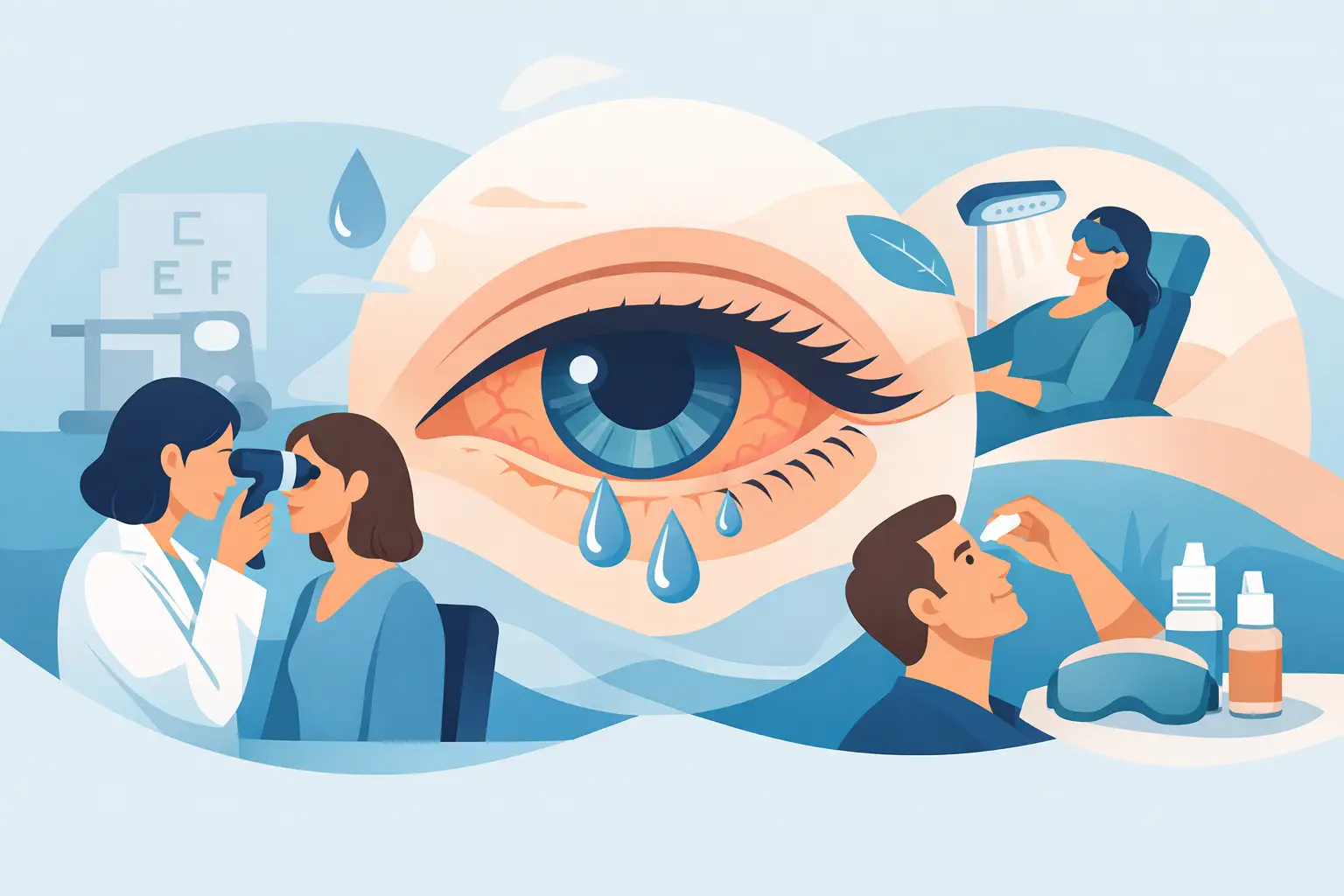
Burning eyes at the end of a workday, watering when you step outside, or vision that clears every time you blink can all point to the same issue. Dry eye assessment and treatment looks beyond the symptom itself to find out why your eyes are not staying comfortably lubricated – and what can genuinely help.
Dry eye is common, but it should not be dismissed as something you simply have to put up with. For many people across Auburn and Western Sydney, it affects computer work, driving, reading, contact lens wear and the ability to enjoy time outdoors. The right care starts with a thorough assessment, because dry eye is not one condition with one solution.
Why dry eye can feel different from person to person
Healthy tears do more than make the eye feel wet. They form a smooth protective layer over the front of the eye, supporting clear vision and comfort. This tear film contains an oily layer, a watery layer and mucus that helps tears spread evenly. If one part is disrupted, tears may evaporate too quickly or fail to protect the eye surface properly.
This is why dry eye can cause more than a dry or gritty feeling. Symptoms may include redness, stinging, tired eyes, fluctuating vision, light sensitivity, itching or a feeling that something is caught in the eye. Some people are surprised to learn that excessive watering can also be a dry eye symptom. When the eye is irritated, it can produce reflex tears that do not have the right balance to provide lasting relief.
Several factors can contribute. Extended screen use often reduces how often and how completely we blink. Air conditioning, fans, smoke, dust and windy conditions can increase evaporation. Contact lenses, hormonal changes, certain medicines, skin conditions around the eyelids and general health conditions can also play a role. Age can contribute too, but persistent discomfort deserves assessment at any age.
What happens during a dry eye assessment and treatment consultation?
A proper consultation is designed to identify the type and severity of dry eye, rather than relying on symptoms alone. Your optometrist will ask about when your symptoms occur, your work and screen habits, contact lens use, medications, eye history and any relevant medical conditions.
The examination then looks closely at the tear film, the eye surface and the eyelids. This may include measuring tear stability, assessing tear volume, checking for inflammation or surface staining, and examining the meibomian glands. These tiny oil glands sit along the eyelid margins and supply the oil layer that slows tear evaporation.
When these glands become blocked or do not produce good-quality oil, tears evaporate rapidly. This is known as evaporative dry eye and is a very common finding. Other patients have reduced tear production, or a combination of both. Eyelid inflammation, known as blepharitis, can occur alongside either type and may need to be addressed as part of the plan.
The value of this detailed approach is clarity. It helps avoid spending money on drops that do not target the underlying problem and gives you realistic expectations about how quickly symptoms may improve.
A treatment plan should match the cause
For mild or occasional symptoms, changes to the home routine may be enough. Your optometrist may recommend a suitable lubricating eye drop or gel, along with practical adjustments such as taking regular visual breaks, blinking fully during screen tasks and avoiding direct airflow to the face. Not all lubricants are alike, so the best choice depends on your symptoms, contact lens use and tear-film findings.
If eyelid gland blockage is contributing, regular warm compresses and careful lid hygiene may be part of treatment. Consistency matters. A short burst of care followed by weeks of stopping often does not give the glands enough support to improve.
For more persistent disease, treatment may need to go further. In-practice options can be considered where appropriate, including intense pulsed light, often called IPL, and low-level light therapy. These technologies may help manage inflammation and support meibomian gland function for selected patients. They are not a one-size-fits-all answer, and the number of sessions, expected benefit and suitability should be discussed after an eye assessment.
Some patients also need prescription treatment, management of allergy, changes to contact lens wear or referral to an ophthalmologist. The best plan is often a combination of in-clinic care and an achievable routine at home.
Small habits that can support comfortable eyes
Treatment works best when daily triggers are addressed as well. For screen users, place the monitor slightly below eye level where possible. This can reduce how widely the eyes are held open and may slow tear evaporation. Set reminders to look away from close work and make a few full, gentle blinks rather than quick partial ones.
Hydration and sleep support general wellbeing, but they are not replacements for targeted dry eye care. Similarly, avoid assuming that redness-relief drops are a dry eye treatment. Some are designed to temporarily reduce the appearance of redness and may not address the cause of irritation. Ask your optometrist which products are suitable for regular use.
Contact lens wearers should be especially careful with persistent dryness. Do not push through discomfort or wear lenses longer than advised. Lens material, replacement schedule, cleaning routine and underlying tear-film issues can all affect comfort. A review can help determine whether your current lenses remain appropriate.
When dry eye needs prompt attention
Dry eye symptoms are usually manageable, but not every red or uncomfortable eye is dry eye. Arrange an urgent eye examination if you have significant pain, sudden vision loss or marked vision changes, a red eye with light sensitivity, an eye injury, chemical exposure, or symptoms that develop after wearing contact lenses. These signs can indicate an infection, inflammation or another eye condition that needs prompt care.
It is also worth booking an examination if over-the-counter drops are no longer helping, symptoms keep returning, or discomfort is affecting your routine. Repeated irritation can affect the eye surface, and earlier management is generally easier than waiting for symptoms to become severe.
Care that is practical, personal and ongoing
Dry eye often needs ongoing management rather than a single quick fix. Your symptoms may improve, then flare during allergy season, after long periods of close work or when the weather changes. Follow-up appointments allow treatment to be adjusted based on your comfort, eye-surface health and response to care.
At Boda Family Eye Care, dry eye consultations are focused on understanding what is happening with your eyes and explaining your options in clear terms. Medicare and private health cover may assist with parts of your care depending on your eligibility and policy, while any recommended treatment costs can be discussed before you proceed.
You do not need to accept gritty, tired or watery eyes as part of daily life. A considered assessment can provide a clearer path towards more comfortable vision and the confidence to get back to the tasks and moments that matter to you.