
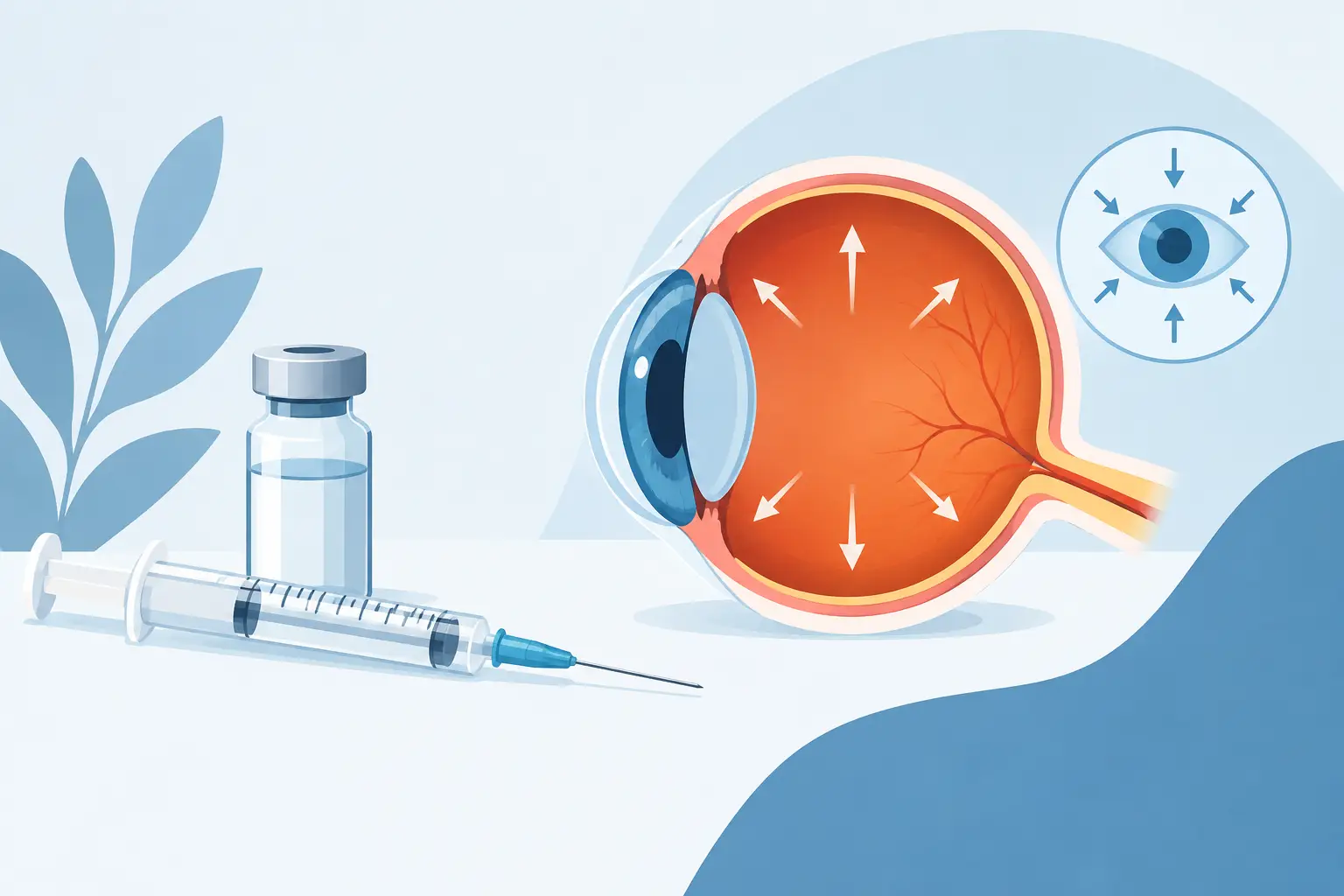
A steroid treatment may be exactly what you need for asthma, eczema, joint pain or eye inflammation. But when people search for steroid intraocular pressures, they are usually asking an important question: can steroids raise the pressure inside the eye? The answer is yes, in some people. Because this rise often causes no early symptoms, regular eye pressure checks can be an important part of safe steroid use.
What are steroid intraocular pressures?
Intraocular pressure, often shortened to IOP, is the pressure created by fluid inside the eye. Your eye continually produces a clear fluid and drains it away through tiny channels at the front of the eye. This balance helps the eye maintain its shape and supports normal function.
Steroids can sometimes reduce how efficiently this fluid drains. When more fluid stays in the eye, the pressure may rise. This is known as a steroid response or steroid-induced ocular hypertension.
A raised reading does not automatically mean glaucoma, and not everyone who uses a steroid will develop high pressure. However, if pressure remains elevated, it can damage the optic nerve over time. The optic nerve carries visual information from the eye to the brain, so protecting it is central to protecting sight.
Which steroids can affect eye pressure?
Steroid eye drops are the most common treatment associated with a pressure rise, particularly when they are used regularly for several weeks or longer. They can be very effective and sometimes essential for treating inflammation, allergies, injury or recovery after eye procedures. The goal is not to avoid needed treatment, but to use it with appropriate monitoring.
Other forms of steroids can also matter. These include steroid tablets, injections, inhalers, nasal sprays, skin creams used around the eyelids, and steroid medicines placed near or inside the eye. The likelihood of an eye pressure response depends on the medicine, dose, duration and the individual patient.
Do not stop a prescribed steroid suddenly without speaking with the health professional managing your care. For conditions such as severe asthma, autoimmune disease or eye inflammation, stopping medication on your own can create a separate and potentially serious problem. Your GP, specialist and optometrist can help coordinate the safest next step.
When can pressure rise?
With steroid eye drops, pressure often rises after a few weeks, although some people respond sooner. With long-term tablets, inhalers or other forms of steroids, changes may develop more gradually. Pressure can also stay normal at an early check and increase later, which is why follow-up timing matters.
For many people, pressure improves once the steroid is reduced, changed or stopped under medical guidance. In others, pressure-lowering eye drops or further treatment may be needed. The right approach depends on why the steroid is being used and how high the pressure has become.
Who has a higher risk of steroid-related pressure rises?
Anyone can have a steroid response, but some patients are more likely to develop increased pressure. This includes people with glaucoma, ocular hypertension or a previous pressure rise while using steroids. A family history of glaucoma is also relevant.
Other factors can include high short-sightedness, diabetes, previous eye injury or surgery, and certain inflammatory eye conditions. Children can be particularly sensitive to steroid eye drops, so parents should always use them exactly as directed and attend recommended reviews. Older adults may also need closer monitoring, especially if they already have optic nerve changes.
Your optometrist will consider the whole picture rather than relying on one risk factor. A patient using a short steroid course with healthy eyes may need different follow-up from someone with a strong family history of glaucoma who needs long-term treatment.
Why high eye pressure can be hard to notice
A gradual increase in eye pressure usually does not make the eye feel painful or affect vision straight away. You may not notice redness, blur or discomfort. This is why a normal-feeling eye is not a reliable way to rule out a pressure problem.
Over time, untreated high pressure can contribute to glaucoma damage. Early glaucoma commonly affects peripheral vision first, so central vision can remain clear while changes are already occurring. Regular testing gives us an opportunity to identify concern before there is significant loss of vision.
A sudden and severe pressure rise is less common, but it needs urgent attention. Seek prompt emergency eye care if you develop a very red, painful eye, sudden blurred vision, halos around lights, a severe headache, nausea or vomiting. These symptoms can have several causes, but they should not be ignored.
How steroid intraocular pressures are checked
An eye pressure check is quick, but a thorough assessment is about more than one number. Pressure naturally varies between people and can fluctuate through the day. One reading is interpreted alongside the appearance of the optic nerve, your medical history, corneal thickness and, where appropriate, scans and visual field testing.
At an eye examination, your optometrist may measure your pressure with specialised equipment and examine the front and back of your eyes. If there is concern about glaucoma risk, imaging of the optic nerve and testing of peripheral vision can establish a useful baseline and identify subtle changes over time.
If you are about to begin a prolonged course of steroid eye drops, or you already use steroids regularly, tell your optometrist the medicine name, strength and how often you use it. Bringing the bottle, inhaler or a photo of the label can help. It is also useful to mention any past glaucoma testing and whether close relatives have glaucoma.
What happens if your pressure is raised?
First, the finding is confirmed and assessed in context. Your optometrist may recommend a repeat measurement, further testing or a review with the prescribing doctor. Depending on the situation, the prescriber may be able to adjust the dose, use a different steroid, shorten the treatment period or consider a non-steroid option.
Sometimes the steroid remains necessary and the eye pressure is treated separately with pressure-lowering drops. If pressure is significantly raised, there are optic nerve changes, or glaucoma is suspected, referral to an ophthalmologist may be appropriate. Coordinated care is especially valuable when several health conditions are involved.
Practical steps while using steroids
Use steroid medication exactly as prescribed and do not share eye drops with anyone else. If you use more than one type of eye drop, ask how long to wait between them, as spacing drops apart helps each medicine work properly.
Keep scheduled eye reviews even if your eyes feel comfortable. Let your eye care provider know if you are using steroid medication from a GP, dermatologist, respiratory physician, rheumatologist or another specialist. A complete medication history helps prevent important details being missed.
For parents, store drops safely out of children’s reach and avoid continuing an old prescription for a new red or irritated eye. Red eyes have many possible causes, and using steroid drops without an examination can mask infection or worsen certain conditions.
If you have been prescribed steroids and are unsure whether your eye pressure has been checked, booking a comprehensive eye examination is a sensible next step. At Boda Family Eye Care, we can assess your eye health, explain your results clearly and help coordinate care with your GP or eye specialist when needed. Early checks are simple, and they offer reassurance when your eyes are quietly doing the hard work of seeing every day.