
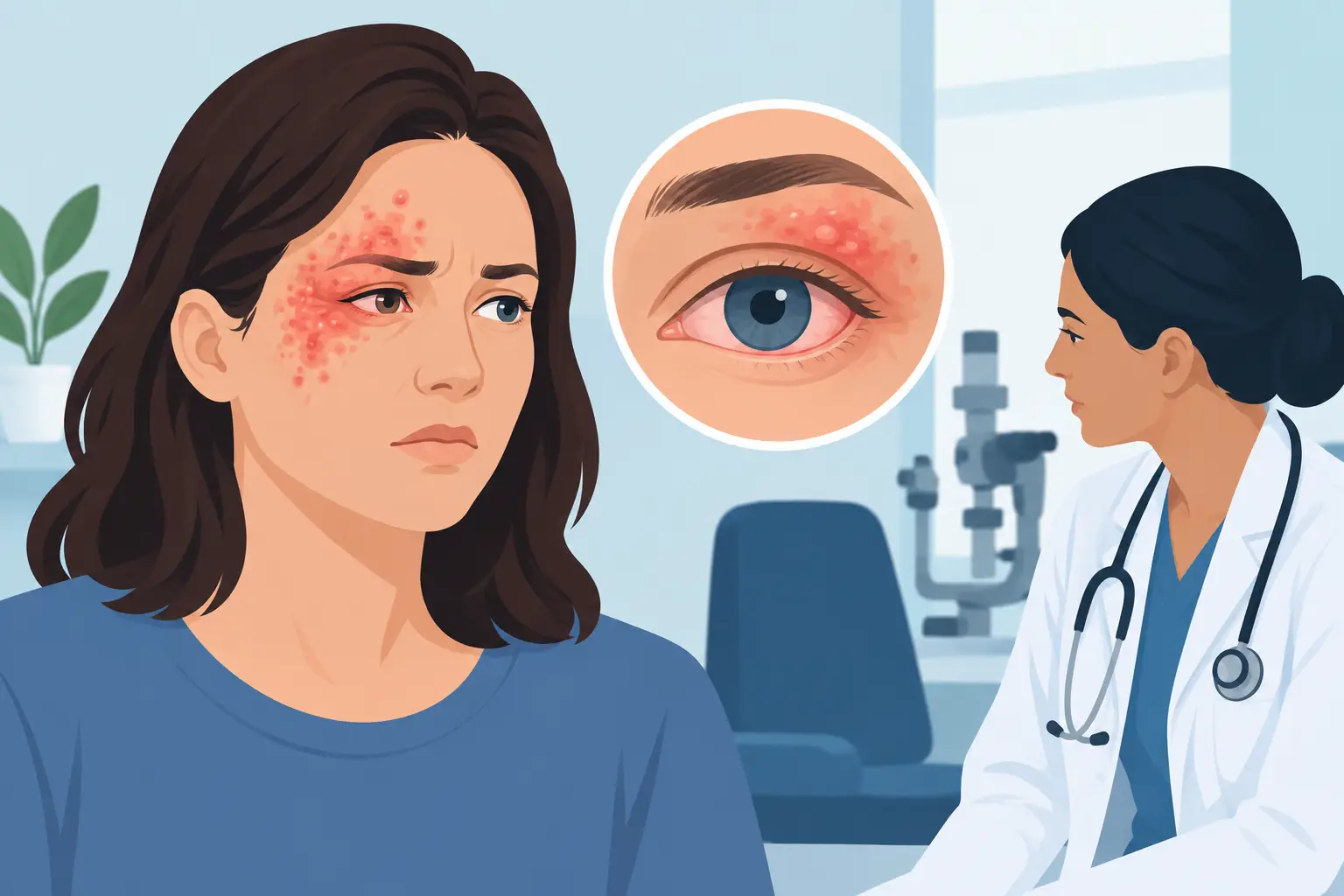
A painful rash on the forehead or eyelid can be much more than a skin concern. Herpes zoster ophthalmicus is shingles affecting the nerve pathway around the eye, and it needs prompt medical assessment because inflammation can affect the cornea, pressure inside the eye and, in some cases, sight.
If you develop a new one-sided facial rash, eye redness or eye pain, do not wait to see whether it settles. Same-day advice from a GP, optometrist or ophthalmologist is the safest approach, particularly when the rash is near the eye.
What is herpes zoster ophthalmicus?
Herpes zoster ophthalmicus, often shortened to HZO, occurs when the varicella-zoster virus reactivates in the ophthalmic branch of the trigeminal nerve. This is the same virus that causes chickenpox. After chickenpox, the virus remains inactive in the body and can reactivate years later as shingles.
When shingles involves the nerve supplying the forehead, upper eyelid, scalp and eye, the eye itself may become involved. The skin rash can be obvious, but eye complications do not always match the severity of the rash. Someone with a relatively mild-looking rash may still need close eye monitoring.
HZO is more common with increasing age, but it can occur in younger adults as well. A weakened immune system, certain medical conditions, major illness and some medicines can increase the likelihood of shingles. It is not caused by poor hygiene or by something a person has done wrong.
The signs that should prompt urgent eye care
Shingles usually affects one side of the face and generally does not cross the midline. Before blisters appear, people often notice burning, tingling, sensitivity to touch or a deep ache on the forehead or scalp. This can be followed by a red rash and fluid-filled blisters on the forehead, around the eyebrow, upper eyelid or side of the nose.
Eye symptoms may begin at the same time as the rash or appear later. Watch for a red eye, worsening pain, a gritty feeling, light sensitivity, watering, blurred vision, eyelid swelling or difficulty keeping the eye open. These symptoms should be assessed urgently, even if your vision seems mostly normal.
Blisters on the tip, side or bridge of the nose can indicate a higher chance of eye involvement. This is sometimes called Hutchinson’s sign. However, its absence does not mean the eye is safe. Any shingles rash near the eye deserves professional advice.
Seek emergency care immediately if you have sudden or marked vision loss, severe eye pain, increasing light sensitivity, new double vision, a severe headache with eye symptoms, confusion, weakness, or a rash affecting the eye in a person with a significantly weakened immune system.
Why eye assessment matters
The virus and the body’s inflammatory response can affect several parts of the eye. The cornea, the clear front surface of the eye, may develop inflammation or infection-like changes that cause pain, light sensitivity and blurred vision. Inflammation inside the eye, known as uveitis, can also occur and may raise the pressure within the eye.
Other possible problems include conjunctivitis, inflammation of the eyelids or surface tissues, reduced corneal sensation and, less commonly, serious retinal or optic nerve involvement. Some complications can develop after the skin rash starts improving, which is why follow-up appointments matter.
An eye examination looks beyond the visible rash. Your optometrist or ophthalmologist may check visual acuity, eye pressure, pupil reactions, the corneal surface and the inside of the eye. Fluorescein dye and a microscope examination can reveal corneal changes that cannot be seen in a bathroom mirror.
Treatment works best when started early
Antiviral medicines prescribed by a doctor are the main treatment for shingles. They are most effective when started as early as possible, ideally within 72 hours of the rash appearing. That said, do not assume it is too late to seek help after three days. Antiviral treatment may still be appropriate when new blisters are appearing, symptoms are significant, or there is suspected eye involvement.
Treatment depends on your symptoms and examination findings. In addition to antiviral medicine, your treating team may recommend pain relief, lubricating eye drops or other prescription eye medicines. Steroid eye drops can be very useful for particular types of inflammation, but they must only be used under close professional direction. Using leftover drops, especially steroid drops, can worsen some eye infections or delay the right care.
Avoid wearing contact lenses until your eye care professional confirms it is safe to restart. It is also sensible to avoid eye makeup and creams close to blistered skin, and not to rub the eye. Cool, clean compresses over closed eyelids may ease discomfort, but they are not a replacement for treatment.
Can herpes zoster ophthalmicus spread to others?
You cannot give someone shingles in the usual sense. However, fluid from active shingles blisters can pass the varicella-zoster virus to someone who has never had chickenpox or has not been vaccinated against it. That person could develop chickenpox, not shingles.
Keep the rash covered where practical, avoid touching or picking blisters, wash your hands carefully, and avoid close contact with people who are pregnant and not known to be immune, newborn babies, and people with weakened immune systems until the blisters have dried and crusted. Your GP can give individual advice if a household member may be at higher risk.
What to expect during recovery
Many people improve over several weeks, although the skin can take time to settle and the area may remain sensitive. Pain can be substantial, and some people develop post-herpetic neuralgia, where nerve pain continues after the rash has healed. Early treatment and appropriate pain management may help, but recovery varies from person to person.
Eye follow-up is just as important as the initial appointment. Corneal inflammation, eye pressure changes and other complications may occur later, even when the blisters are fading. Attend recommended reviews and contact your eye care provider sooner if redness, pain, light sensitivity or blur returns.
For some patients, dry eye symptoms or an altered corneal sensation can persist after HZO. These concerns can usually be managed, but they should be assessed rather than simply tolerated. The right treatment depends on whether symptoms are due to surface dryness, inflammation, reduced corneal sensitivity or another complication.
Reducing the risk of future shingles
Shingles vaccination can significantly reduce the risk of shingles and its complications for eligible people. Eligibility for government-funded vaccination can depend on age, Aboriginal and Torres Strait Islander status, immune status and changing program criteria. Speak with your GP or pharmacist about whether vaccination is recommended for you and whether it is funded.
A previous episode of shingles does not automatically rule out vaccination. Your GP can advise on the right timing after recovery, particularly if you have an immune condition or take medicines that affect immunity.
When to contact an eye care professional
A rash near the forehead, nose or eyelid should be treated as an urgent eye health concern. Your GP can arrange antiviral treatment and referral where needed, while an optometrist can assess the front of the eye, monitor vision and eye pressure, and coordinate urgent ophthalmology care if there are signs of deeper involvement.
At Boda Family Eye Care, patients with urgent eye symptoms can be assessed with a thorough, medically focused eye examination and referred promptly when specialist treatment is required. If you suspect shingles near your eye, call for same-day advice rather than waiting for a routine appointment.
Fast action protects more than comfort. If your eye becomes red, painful, sensitive to light or blurry during a shingles outbreak, make getting it checked the next thing you do.