
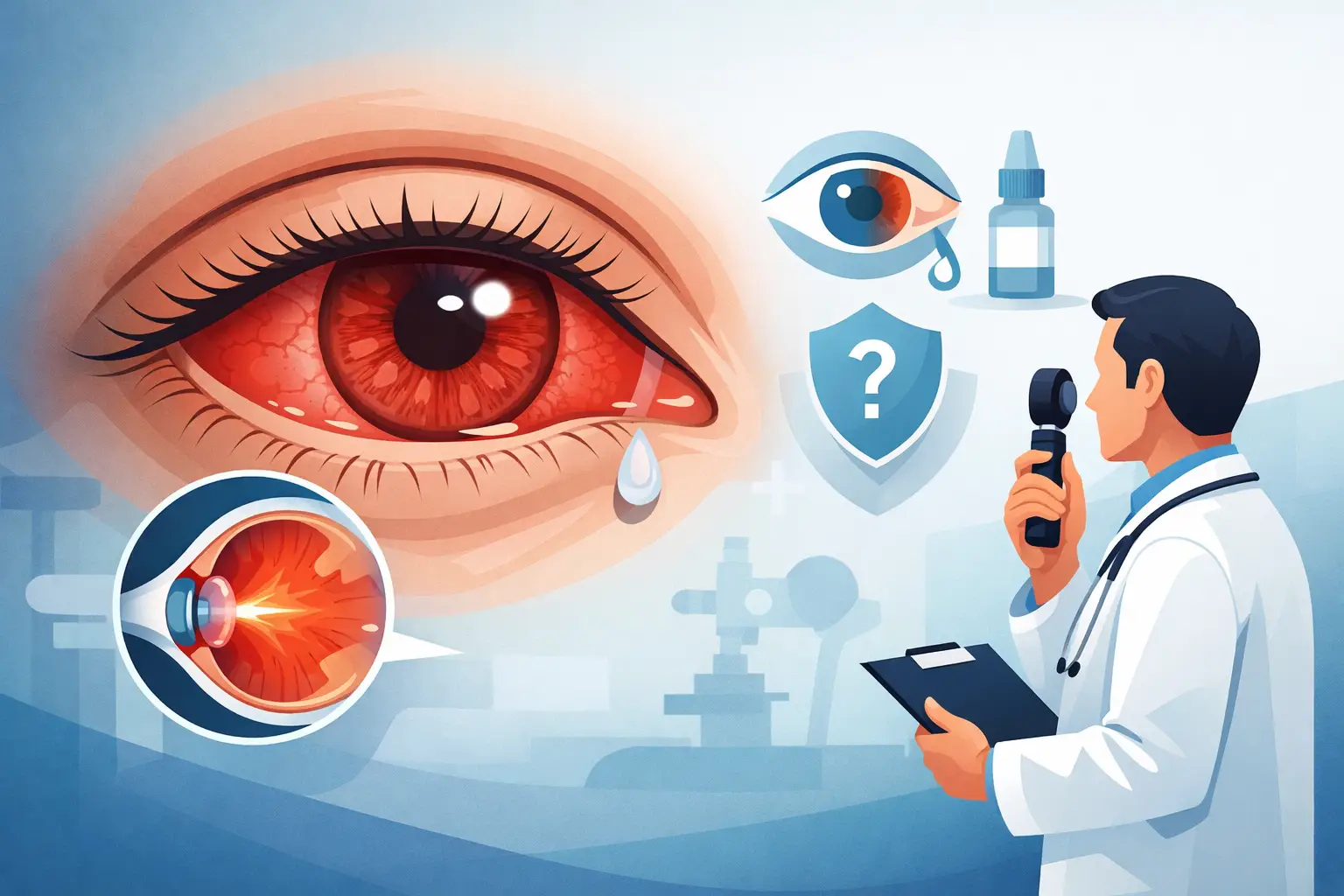
A red, painful eye is not always conjunctivitis. If you have searched for “red eye acute anterior uveitis”, you may be experiencing symptoms that need urgent assessment rather than waiting for them to settle. Acute anterior uveitis is inflammation inside the front part of the eye. With prompt, appropriate treatment, most people recover well. Left untreated, however, it can lead to complications that affect sight.
The key message is simple: a red eye combined with pain, light sensitivity or blurred vision should be assessed on the same day. Do not rely on redness-relief drops or use old prescription eye drops without clinical advice.
What is acute anterior uveitis?
The uvea is the layer of tissue inside the eye that includes the iris, or coloured part of the eye. In anterior uveitis, inflammation occurs at the front of the eye, usually affecting the iris and nearby structures. It may also be called iritis.
Unlike a mild irritation on the eye’s surface, uveitis is an internal inflammatory condition. The eye can look quite red, particularly around the coloured part of the eye, and may feel deeply sore or ache rather than simply itchy or gritty.
Acute anterior uveitis can develop in one eye or, less commonly, both eyes. It may come on over hours to a few days. Some people have a single episode, while others experience recurrences and need ongoing monitoring.
Red eye and acute anterior uveitis: symptoms to recognise
Symptoms vary, but the most typical pattern is a red eye with pain and sensitivity to light. Indoor lighting can be uncomfortable, and daylight may make the eye water or cause you to squint. Vision may become hazy, and some people notice new floaters.
A simple way to think about it is this: itch is more often linked with allergy, and a sticky discharge can occur with conjunctivitis. Acute anterior uveitis is more likely to cause pain, photophobia and reduced vision. These patterns overlap, though, which is why self-diagnosis is risky.
Seek urgent eye care if you have any of the following:
- eye pain that is moderate, severe or worsening
- redness with blurred, reduced or distorted vision
- significant sensitivity to light
- a red eye after an eye injury or chemical exposure
- a red eye while wearing contact lenses, especially if it is painful
- headache, nausea, halos around lights or a suddenly worsening eye.
These symptoms can also occur with other urgent conditions, including corneal infection, corneal ulcer, scleritis or acute glaucoma. Each needs a different treatment. An emergency eye examination helps identify the cause quickly.
Why prompt assessment matters
Inflammation from anterior uveitis can cause inflammatory cells and protein to build up in the fluid at the front of the eye. An optometrist or ophthalmologist can detect these changes using a slit lamp microscope, even when they are not obvious in a mirror.
Without treatment and follow-up, inflammation may lead to the iris sticking to the lens, raised eye pressure, cataract formation or swelling affecting central vision. These complications are not inevitable, and early care greatly reduces the risk, but they explain why a painful red eye should never be treated as a routine inconvenience.
An eye examination also checks the cornea, pupils, eye pressure and retina where appropriate. This is particularly important because treating the wrong condition with the wrong drops can delay recovery. For example, steroid eye drops can be very effective for confirmed uveitis, but they may worsen an undiagnosed infection.
What causes anterior uveitis?
In many cases, no definite cause is found. This can be reassuring: a first episode does not automatically mean there is a serious underlying health condition.
Sometimes, uveitis is linked with an immune-related inflammatory condition. These may include ankylosing spondylitis and related spinal arthritis, inflammatory bowel disease, psoriasis or certain types of arthritis. It can also occasionally be associated with infection, injury or a reaction related to previous eye surgery.
Your eye care practitioner will ask about your general health, previous episodes and family history. Mention back pain and stiffness, joint swelling, recurring skin rashes, bowel symptoms, mouth ulcers, recent infections and any new medicines. If the uveitis is recurrent, affects both eyes, is severe, or occurs alongside other symptoms, your GP or ophthalmologist may arrange further investigations or coordinate care with another specialist.
The investigation process depends on your individual presentation. Broad testing is not always needed after a straightforward first episode, while recurrent uveitis may warrant a more detailed medical review.
How acute anterior uveitis is treated
Treatment is designed to settle inflammation, relieve pain and prevent complications. An ophthalmologist commonly prescribes anti-inflammatory steroid eye drops after examining the eye and confirming the diagnosis. Drops that temporarily widen the pupil may also be used to ease painful iris spasm and help prevent internal adhesions.
The exact drop schedule matters. At the beginning, treatment can be frequent, then reduced gradually as the inflammation improves. Stopping steroid drops suddenly or tapering them without advice can allow inflammation to return. Attend every review appointment, even if the redness and discomfort seem to have disappeared.
Eye pressure may rise because of the inflammation itself or as a response to steroid treatment. This is another reason regular pressure checks are part of safe uveitis care.
If a contact lens is in the affected eye, remove it and do not wear lenses again until you have been examined and advised it is safe. Avoid driving if your vision is blurred or light sensitivity makes you unsafe on the road. Sunglasses can make daylight more comfortable, but they are not a substitute for treatment.
What not to do with a painful red eye
It is understandable to try lubricating drops, a cold compress or pharmacy redness-relief drops when an eye suddenly looks inflamed. Lubricants may soothe minor surface discomfort, but they will not treat uveitis. Redness-relief drops can mask the appearance of the problem and are not appropriate treatment for a painful red eye.
Do not use someone else’s prescription drops, leftover antibiotics or leftover steroid drops. Do not patch the eye. If you suspect a chemical splash, immediately rinse the eye continuously with clean water for at least 20 minutes and seek emergency assessment straight away.
For pain relief, ask a pharmacist or clinician what is suitable for you, particularly if you have other health conditions or take regular medication. The priority remains an urgent examination to find the cause.
Where to seek care in Western Sydney
For a new red eye with pain, light sensitivity or visual change, contact an optometrist experienced in urgent eye assessment as soon as possible. A thorough examination can establish whether the eye needs immediate ophthalmology treatment or hospital care. If there is sudden major vision loss, severe pain with nausea or vomiting, a penetrating injury, or chemical exposure, attend an emergency department without delay.
At Boda Family Eye Care in Auburn, urgent eye concerns are assessed with a careful, medically focused approach, with referral and collaboration pathways when specialist ophthalmology care is needed. Medicare eligibility and private health cover can vary, so it is sensible to ask about likely costs when booking.
A painful red eye is your cue to act early, not to wait it out. Timely assessment protects comfort now and, more importantly, gives your vision the best chance of a full recovery.