
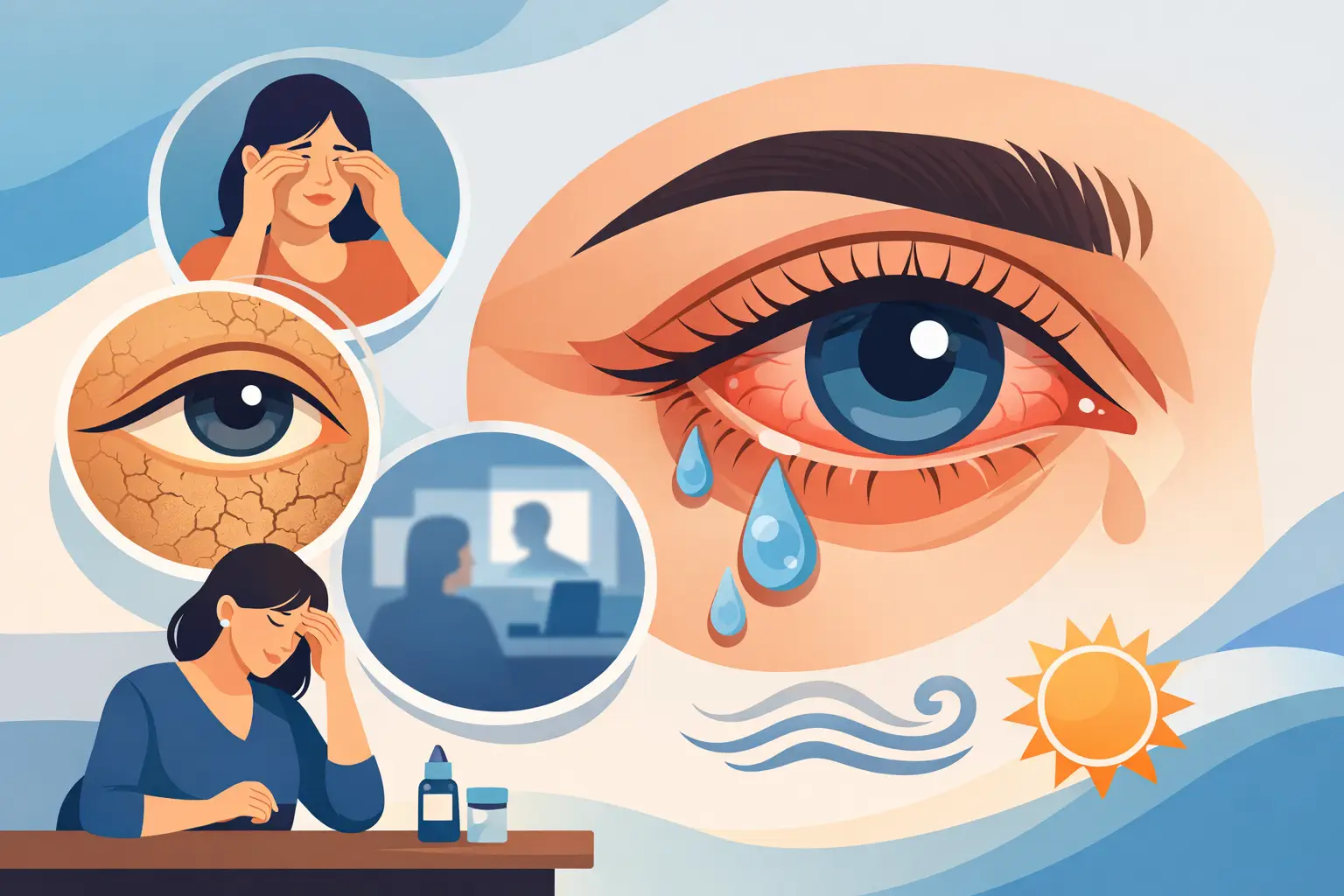
Your eyes should not feel gritty by mid-morning, sting every time you step outside, or water so much that you assume they cannot possibly be dry. Yet those are some of the most common dry eye disease symptoms people ignore for months, sometimes years, before booking an eye check.
Dry eye is more than occasional irritation. It is a common eye condition where your tears do not provide enough moisture, stability or protection for the surface of the eye. For some people, symptoms come and go. For others, they affect reading, driving, screen use and overall comfort every day. The earlier it is properly assessed, the easier it is to understand what is actually causing it and what may help.
What dry eye disease symptoms can feel like
Dry eye does not look the same for everyone. Some patients describe burning or stinging, while others talk about tired, heavy eyes that never quite feel settled. A scratchy or gritty sensation is especially common, as though there is dust or sand in the eye even when nothing is there.
Blurred vision can also be part of dry eye, particularly if it clears for a moment after blinking. That happens because the tear film helps keep vision smooth and stable. When the tear layer breaks up too quickly, vision may fluctuate, especially during computer work, reading or long periods of concentration.
Another symptom that often surprises people is excessive watering. It sounds contradictory, but irritated eyes can produce reflex tears. These are not always the high-quality tears needed to keep the eye comfortable, so the eye may still feel dry despite watering.
Many people also notice sensitivity to wind, air conditioning, heaters or smoky environments. Contact lenses may become uncomfortable sooner than they used to. Some patients say their eyes feel worse late in the day, while others wake with irritation first thing in the morning.
Common dry eye disease symptoms people overlook
Some signs are subtle enough to be put down to tiredness, age or too much screen time. The problem is that dry eye can overlap with all of those, so it is easy to miss.
If your eyes often feel sore after using a laptop or mobile, if you blink more to clear your vision, or if you avoid wearing contact lenses because they no longer feel comfortable, dry eye may be part of the picture. Redness that keeps returning is another clue, especially if there is no obvious infection or allergy.
Eye fatigue matters too. Patients do not always describe dryness directly. Instead, they say their eyes feel strained, they struggle to focus by afternoon, or they find prolonged reading more uncomfortable than it used to be. Those complaints can all point to an unstable tear film.
Why symptoms do not always match severity
One of the frustrating things about dry eye is that symptoms and clinical signs do not always line up neatly. Some people have significant discomfort with only mild visible changes. Others show more obvious surface damage but report fewer symptoms.
There are a few reasons for this. Dry eye has different causes, including poor tear quality, low tear production, eyelid gland problems and inflammation. More than one of these may be happening at the same time. On top of that, environmental triggers and general health can make symptoms better or worse from one week to the next.
This is why guessing rarely helps for long. Lubricating drops might give temporary relief, but without understanding what type of dry eye is present, treatment can become a cycle of trial and error.
What can trigger dry eye symptoms
Modern life does not do the tear film many favours. Screen use is a major factor because we tend to blink less often and less completely when concentrating. That means tears evaporate faster and the oil layer that helps protect them may not spread properly.
Air conditioning, heating, wind and low-humidity environments can also worsen symptoms. So can long drives, plane travel and spending time in front of fans. These triggers do not necessarily cause dry eye on their own, but they can reveal a problem that is already there.
Hormonal changes, certain medications, autoimmune conditions, eyelid inflammation and previous eye surgery can also contribute. Age plays a role for many adults, but younger people are not exempt. We often see dry eye symptoms in people who spend long hours on devices or wear contact lenses regularly.
When dry eye may be linked to the eyelids
A large number of dry eye cases involve the meibomian glands, which sit along the eyelid margins and produce the oily part of the tear film. If these glands become blocked or stop working well, tears evaporate more quickly.
This type of dry eye often comes with symptoms such as burning, fluctuating vision and irritation that worsens through the day. Some people also have crusting around the lashes, tender eyelids or a history of styes. In these cases, the issue is not simply that the eyes need more moisture. The quality of the tears needs attention as well.
That is why a proper dry eye assessment looks beyond the eye surface alone. The eyelids, tear stability and gland function all matter when planning treatment.
When to book an eye examination for dry eye disease symptoms
If symptoms keep returning, interfere with work or reading, or do not settle with basic lubricating drops, it is worth having them checked. The same applies if your eyes are red often, your vision comes and goes, or contact lenses have become difficult to tolerate.
Some symptoms need more urgent attention because not every red, uncomfortable eye is dry eye. If you have significant pain, sudden vision loss, light sensitivity, discharge, or symptoms in one eye that started abruptly, seek prompt eye care. These can point to other conditions that should not be self-managed.
For ongoing irritation, the value of an eye examination is clarity. Instead of guessing whether it is dryness, allergy, screen strain or something else, you can have the surface of the eye and eyelids assessed properly.
How dry eye is assessed
A thorough dry eye work-up looks at both symptoms and signs. Your optometrist may ask when symptoms occur, what makes them worse, whether you use screens for long periods, and what drops or treatments you have already tried.
The examination may include looking at the tear film, eyelid margins and meibomian glands, checking for inflammation, and assessing the health of the front surface of the eye. In a medically focused practice such as Boda Family Eye Care, this detailed approach helps guide treatment rather than relying on a one-size-fits-all plan.
That matters because dry eye management is rarely about one product alone. It may involve improving the tear film, treating eyelid gland dysfunction, reducing inflammation, adjusting the environment, or a combination of these.
What can help relieve dry eye symptoms
Treatment depends on the cause. For mild cases, preservative-free lubricating drops, better screen habits and simple changes at home may help. Taking regular visual breaks, blinking fully, staying aware of fan or air conditioner airflow and using warm compresses can make a real difference for some patients.
When gland dysfunction or inflammation is more established, stronger treatment may be needed. This can include prescription therapies, in-chair procedures, or technology-based care such as IPL or low-level light therapy where clinically appropriate. The right option depends on the findings. More treatment is not always better, but targeted treatment usually is.
It also helps to set realistic expectations. Dry eye often improves with consistent care, but it may not disappear overnight. Some people need a short treatment course. Others need ongoing management, especially if there are underlying health, hormonal or environmental factors involved.
Why early care matters
Longstanding dry eye can affect more than comfort. It can make vision less reliable and everyday tasks more frustrating. It may also reduce tolerance for contact lenses and increase irritation over time if the surface of the eye remains inflamed.
Early care gives you a better chance to identify what is driving the symptoms before they become harder to settle. It also means you are less likely to spend money on shelves full of drops that are not addressing the real issue.
If your eyes are often irritated, watery, blurry or tired, do not assume it is something you simply have to put up with. A careful assessment can separate occasional dryness from a condition that needs proper management, and that can make daily life far more comfortable.
Comfortable vision should feel normal, not like a good day you happen to have once in a while.