
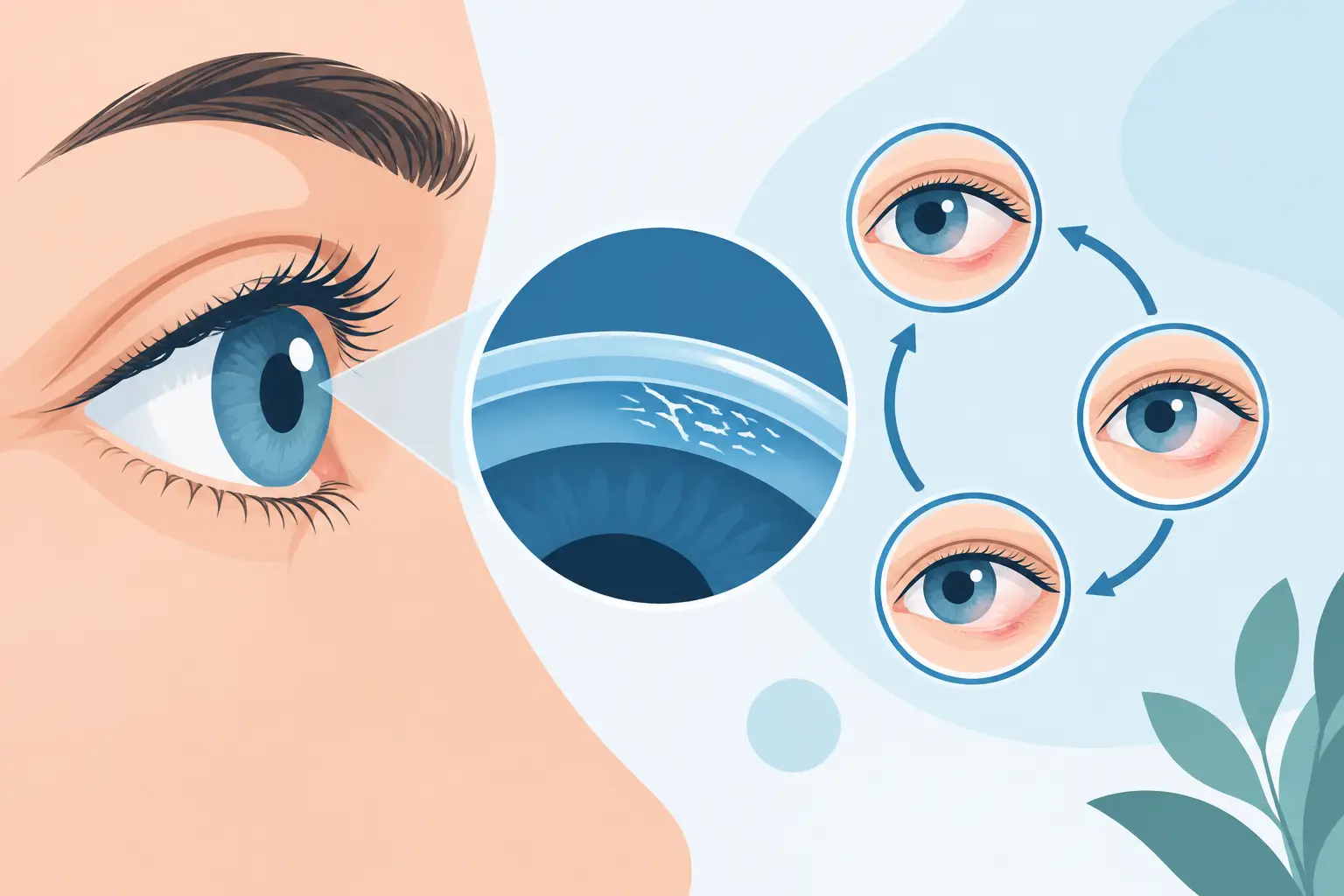
Waking with a sharp, gritty, intensely painful eye can be alarming, particularly when it has happened before. Recurrent corneal erosion is a condition in which the clear front surface of the eye repeatedly breaks down, often causing pain on first opening the eyes in the morning. It is not something you should simply put up with. The right assessment can protect the cornea, ease discomfort and reduce the chance of another episode.
What is recurrent corneal erosion?
The cornea is the clear, protective window at the front of the eye. Its outermost layer, called the epithelium, should attach firmly to the layer beneath it. With recurrent corneal erosion, small areas of this surface layer do not adhere properly. They can lift or tear away, exposing sensitive corneal nerves.
An erosion may settle, then return days, weeks or even months later. For some people, episodes follow a clear injury, such as a scratch from a fingernail, a plant or a piece of dust. For others, the problem is linked to an inherited corneal condition known as epithelial basement membrane dystrophy, where the surface cells do not anchor as securely as they should.
The symptoms can feel disproportionate to the size of the injury. The cornea has a high number of nerve endings, so even a small defect can cause significant pain, watering and light sensitivity.
Why does recurrent corneal erosion often hurt most in the morning?
During sleep, the eye surface can become drier. If the eyelid sticks to a fragile area of cornea, opening the eye can pull the loose surface cells away. This is why many people describe sudden pain as soon as they wake, open their eyes or blink for the first time.
Symptoms may ease as the day goes on, but that does not mean the cornea has fully healed. Some erosions cause persistent discomfort, redness, blurred vision, a foreign-body sensation or sensitivity to light. Vision can fluctuate if the affected area sits over the centre of the cornea.
Dry eye disease, eyelid inflammation and poor tear quality can make the eye surface more vulnerable. This does not mean every dry, sore eye is an erosion, but managing dryness can be an important part of preventing repeat episodes.
Common causes and risk factors
A previous corneal abrasion is a frequent starting point. A scratch may appear to heal, yet the new epithelial cells may remain weakly attached. Repeat episodes can develop long after the original injury has been forgotten.
Other contributing factors include corneal dystrophies, dry eye, diabetes, previous eye surgery and regular overnight contact lens wear. Rubbing the eyes, sleeping in a dry or air-conditioned room, or using an unsuitable eye drop can also aggravate an already fragile surface.
Contact lens wear deserves particular care. Lenses can be helpful in selected treatment plans, but a painful red eye in a contact lens wearer needs prompt assessment. Infection of the cornea can worsen quickly and should never be assumed to be a simple recurrence.
When to seek urgent eye care
A known history of erosions can make it tempting to self-treat each flare-up. However, pain, redness and blurred vision can also occur with conditions that need different treatment, including corneal infection, inflammation inside the eye or a retained foreign body.
Arrange same-day urgent eye assessment if you have any of the following:
- severe pain, particularly if it is new or worsening
- reduced, hazy or suddenly blurred vision
- increasing redness, swelling or light sensitivity
- a discharge, a white spot on the cornea or an injury involving metal, chemicals or organic material
- contact lens-related pain or redness
Do not use leftover antibiotic drops, steroid drops or anaesthetic drops unless a clinician has specifically prescribed them for the current problem. Anaesthetic drops may numb pain briefly, but repeated use can seriously damage the cornea and delay healing.
If a chemical enters the eye, begin flushing immediately with clean water or saline and seek urgent medical care. Do not wait to see whether symptoms settle.
How an optometrist diagnoses the problem
A thorough eye examination is needed to confirm whether an erosion is present and to look for the cause. Your optometrist will discuss the timing of symptoms, previous injuries, contact lens use, dry eye symptoms and relevant health conditions.
Using a slit lamp microscope and a harmless yellow dye called fluorescein, they can examine the corneal surface in detail. The dye highlights areas where the epithelium is missing or unstable. The examination also helps identify signs of infection, inflammation or corneal dystrophy that may affect treatment.
Sometimes the cornea looks normal between episodes. Even then, a detailed history of repeated sharp morning pain can provide valuable clues. Photographs or notes from an acute episode may also assist with ongoing care.
Treatment for recurrent corneal erosion
Treatment depends on the size of the erosion, how often it returns, the health of the eye surface and whether infection is a concern. The immediate goals are to promote healing, control pain and protect the cornea. The longer-term goal is stronger attachment of the surface cells.
For a fresh erosion, treatment may include preservative-free lubricating drops, a protective ointment and, when clinically indicated, antibiotic drops or ointment to reduce infection risk while the surface is open. Your optometrist may recommend a bandage contact lens in some cases. This is a specialised treatment, not a lens to use independently, and it requires close review because the risk of infection must be carefully managed.
Once the surface has healed, regular lubrication is often continued for a period of time. A thicker lubricating ointment at bedtime can reduce eyelid-to-cornea sticking overnight. Hypertonic saline drops or ointment may be recommended for some patients because they can help reduce surface swelling and improve epithelial adhesion.
If dry eye or blocked eyelid oil glands are contributing, treating these factors is worthwhile. This may involve tailored lubricants, warm compresses, eyelid hygiene or in-practice dry eye treatment. The best option depends on the cause and the condition of the tear film, rather than a one-size-fits-all routine.
For stubborn or frequently recurring cases, an optometrist may co-manage treatment with an ophthalmologist. Options can include oral medication to address eyelid inflammation, removal of poorly attached surface cells, anterior stromal puncture for suitable peripheral erosions, or phototherapeutic keratectomy. These procedures can be very effective for the right patient, but they are not necessary for everyone and carry their own recovery considerations.
Reducing the chance of another episode
Prevention usually starts with a consistent night-time eye surface routine. Use only the drops or ointment recommended for you, as some products contain preservatives that are not ideal for frequent use. Applying ointment before bed can be particularly helpful for people whose symptoms occur on waking.
Try not to rub your eyes, especially when they feel dry or irritated. If you wake with the feeling that an eyelid is stuck, avoid forcing the eye open. Keeping lubricating drops beside the bed may help you moisten the eye first, then open it gently.
Good contact lens habits matter too. Follow your replacement schedule, avoid sleeping in lenses unless specifically advised, and stop wearing lenses if the eye becomes painful or red. A review of lens fit and wearing routine may be needed after an erosion.
Personalised care close to home
Repeated eye pain can affect sleep, work, driving and confidence with contact lenses. It can also be difficult to know whether an episode is a familiar recurrence or something more serious. At Boda Family Eye Care, a detailed examination can help identify the cause of a painful eye, support healing and create a prevention plan that fits your day-to-day needs.
If you have recurrent morning eye pain, unexplained light sensitivity or a red painful eye, arrange an eye assessment rather than waiting for the discomfort to pass. Early care gives the cornea its best chance to heal well and helps you return to clearer, more comfortable vision.