
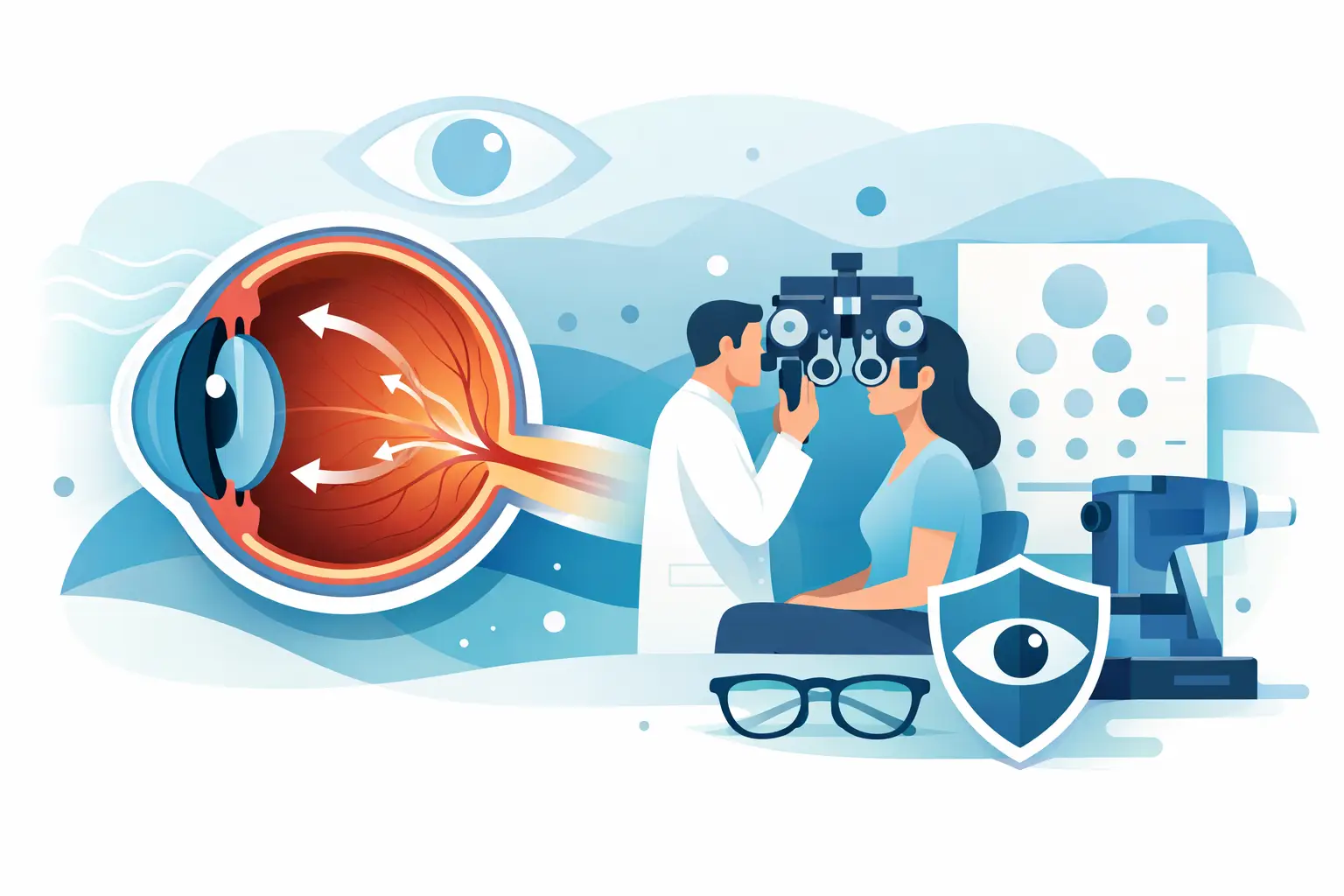
Glaucoma often causes no pain, no redness and no obvious change to the way you see at first. Yet it can gradually damage the optic nerve – the connection between your eye and brain – and the vision already lost cannot usually be restored. That is why a thorough eye examination is about far more than checking whether you need new glasses.
For families across Auburn and Western Sydney, regular eye care offers a practical chance to detect eye disease early, before it affects daily life. With timely monitoring and treatment, many people with glaucoma retain useful vision throughout their lives.
What is glaucoma?
Glaucoma is a group of eye conditions that damages the optic nerve. In many cases, this damage is associated with raised pressure inside the eye, known as intraocular pressure. However, glaucoma can also develop when eye pressure is within the statistically normal range. This is called normal-tension glaucoma.
The optic nerve carries visual information from the eye to the brain. When glaucoma damages its nerve fibres, vision loss commonly begins at the edges of the visual field. Central vision, used for reading, recognising faces and seeing fine detail, can remain clear until later stages. This makes the condition particularly easy to miss without testing.
Glaucoma is not caused by reading in dim light, using screens or needing stronger spectacles. It is an eye health condition that requires assessment, follow-up and, where needed, ongoing treatment.
Why glaucoma is known as a silent condition
The most common form, primary open-angle glaucoma, progresses slowly. A person may adjust to subtle peripheral vision changes without realising it. They may still read the paper, use a mobile and feel their eyesight is fine, even while damage is occurring.
This is why checking vision alone is not enough to rule out glaucoma. A comprehensive examination may include measuring eye pressure, assessing the optic nerve, examining the front and back of the eye, and performing imaging or visual field testing when indicated. Each test contributes a different piece of the clinical picture.
One pressure reading does not always provide a complete answer. Eye pressure can vary over time, and some people develop nerve damage at pressures that would not concern another patient. Your optometrist considers your eye structure, family history, test results and any change over time rather than relying on one number alone.
Who has a higher risk?
Anyone can develop glaucoma, but the likelihood increases with age. Risk is also higher if a parent, sibling or close relative has glaucoma. If someone in your family has been diagnosed, let your optometrist know – even if you have no symptoms.
Other factors that can increase risk include diabetes, high short-sightedness, previous eye injury, certain eye conditions, long-term steroid use and some medical conditions that affect blood flow. People from some ethnic backgrounds may also have a greater risk of particular forms of glaucoma.
Having a risk factor does not mean you will develop the condition. It does mean regular, comprehensive eye examinations are especially worthwhile. The right testing schedule depends on your age, findings and individual history.
Symptoms that need prompt eye care
Slowly developing glaucoma rarely gives an early warning. But a less common form, acute angle-closure glaucoma, can cause a sudden and serious rise in eye pressure. This is an urgent eye health problem.
Seek urgent assessment if you experience severe eye pain, a red eye, sudden blurred vision, coloured rings or halos around lights, headache, nausea or vomiting. Do not wait to see whether these symptoms settle, particularly if they come on suddenly. Emergency eye assessment or hospital care may be needed to protect vision.
Sudden vision loss, flashes, a new shower of floaters, a curtain-like shadow in vision or an eye injury also need prompt professional advice. Not every urgent eye concern is glaucoma, but it is safer to have concerning symptoms assessed quickly.
How glaucoma is diagnosed and monitored
A glaucoma assessment is tailored to the individual. Your optometrist will ask about your vision, general health, medicines and family history, then examine your eyes using clinical equipment designed to identify changes that cannot be seen in a mirror.
Pressure measurement is one part of the assessment, but it is not a stand-alone glaucoma test. The optic nerve must be evaluated carefully. Digital scans may measure the thickness of the nerve fibre layer, helping to identify patterns consistent with glaucoma and to compare results over future visits. Visual field testing checks how well you see in different parts of your field of vision.
These tests can feel unfamiliar, but they are generally straightforward and non-invasive. Visual field testing requires concentration and can be tiring, particularly the first time. An unreliable result does not necessarily mean there is a problem – sometimes it simply needs to be repeated. Consistent testing over time helps distinguish normal variation from a meaningful change.
If results suggest glaucoma or a significant risk, referral to an ophthalmologist may be appropriate. Optometrists and ophthalmologists often work together: the ophthalmologist may confirm the diagnosis or provide specialist treatment, while the optometrist can assist with ongoing monitoring, depending on the care plan.
Treatment aims to preserve the vision you have
Glaucoma treatment cannot reverse established optic nerve damage. Its purpose is to slow or stop further damage, usually by lowering eye pressure to a level that is safer for that particular eye.
For many people, prescription eye drops are the first treatment. They need to be used exactly as directed, even when eyesight feels normal. Skipping drops because there are no symptoms can allow pressure to rise again. If drops sting, cause redness, are difficult to manage, or do not suit your health needs, tell your eye care provider. There may be alternatives, and good treatment should be realistic to maintain.
Some patients are treated with laser procedures or surgery under an ophthalmologist’s care. The most suitable approach depends on the type and stage of glaucoma, eye pressure, optic nerve appearance, response to drops and other personal health factors. Treatment is not one-size-fits-all.
Regular reviews remain essential after treatment begins. Glaucoma can change slowly, and a care plan may need adjusting over the years. Bringing your current medications to an appointment, or keeping a list on your mobile, can help your care team make safe decisions.
Protecting your family’s eye health
If glaucoma runs in your family, encourage relatives to arrange an eye examination rather than waiting for a vision problem. This is especially relevant for adults who have not had a comprehensive eye test in several years, or who have assumed clear distance vision means their eyes are healthy.
Parents can also help by modelling regular eye care. While glaucoma is far more common in adults, children may have eye health conditions that need assessment, and family history is useful information at every age. A thorough examination provides an opportunity to discuss vision, comfort, eye coordination and broader eye health in one visit.
At Boda Family Eye Care, examinations are designed to look beyond a glasses prescription and explain findings in clear, practical language. If you have a family history of glaucoma, have been told your eye pressure is high, or are overdue for an eye check, booking a comprehensive appointment is a sensible next step. Early attention may be the quiet protection your sight needs.