
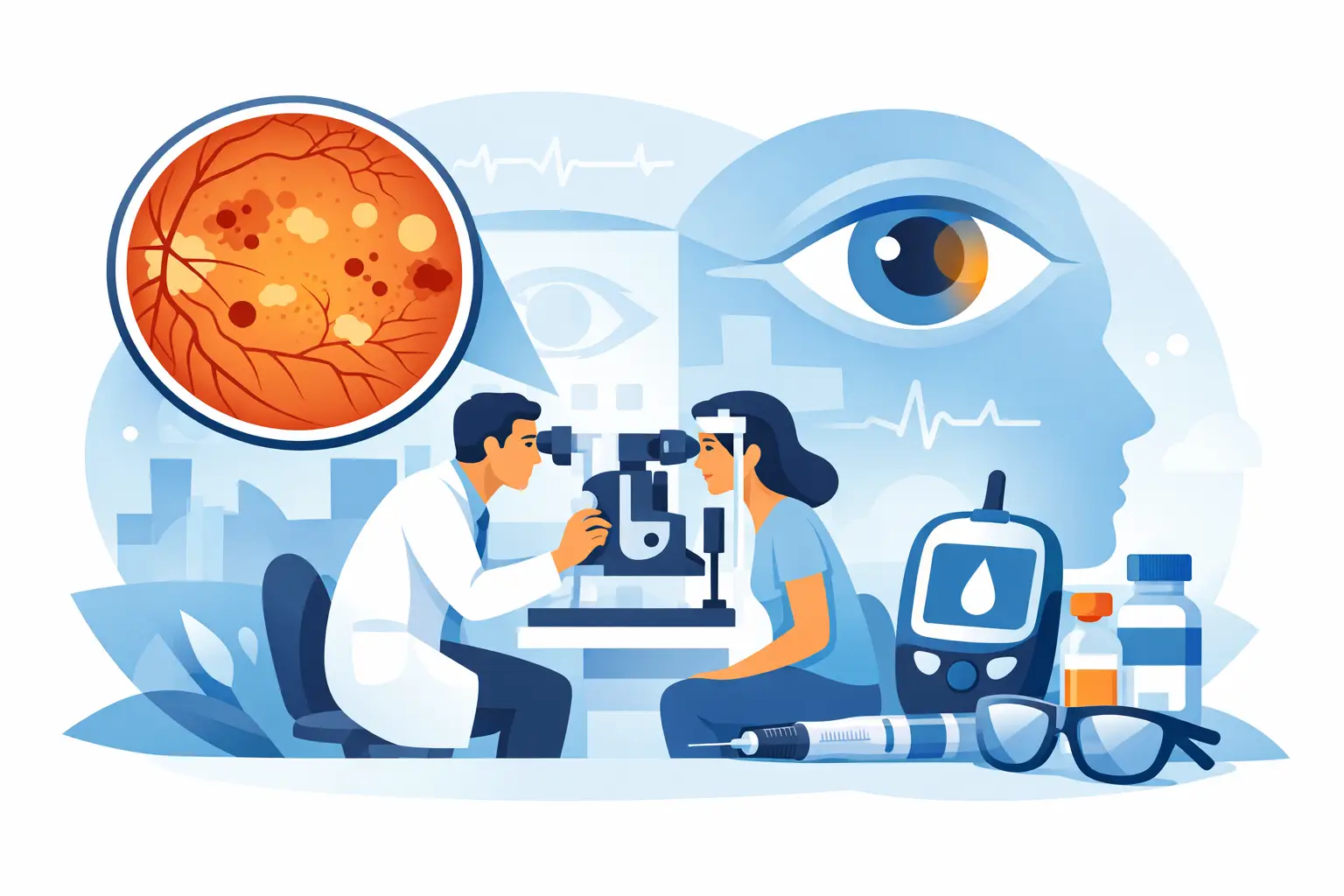
A change in vision is not always the first sign of diabetic retinopathy. In fact, this eye condition can develop quietly while your sight still seems normal. That is why people living with type 1 or type 2 diabetes need regular, thorough eye examinations – not only a check for a new glasses prescription.
Diabetic retinopathy is one of the most common diabetes-related eye conditions, but vision loss is not inevitable. Early detection, good diabetes management and timely treatment can make a meaningful difference. Knowing what your optometrist is looking for can help you take an active role in protecting your vision.
What is diabetic retinopathy?
Diabetic retinopathy occurs when persistently high blood glucose levels damage the tiny blood vessels that supply the retina. The retina is the light-sensitive tissue at the back of the eye that sends visual information to the brain. When its blood vessels are weakened, they may leak, swell, close off or grow abnormally.
The condition can affect one or both eyes. It does not cause diabetic retinopathy because someone has done anything wrong, and it is not simply a result of getting older. It is a complication associated with diabetes, with risk rising over time – particularly when blood glucose, blood pressure or cholesterol levels have been difficult to manage.
There are different stages. In early diabetic retinopathy, small blood vessel changes may be visible during an eye examination without affecting day-to-day sight. This is often called non-proliferative diabetic retinopathy. More advanced disease can involve the growth of fragile, abnormal blood vessels. These vessels can bleed into the eye or create scar tissue that threatens vision.
Another important problem is diabetic macular oedema. This happens when fluid builds up in the macula, the central part of the retina responsible for detailed vision used for reading, recognising faces and driving. It can occur at different stages of diabetic retinopathy and needs prompt assessment.
Why regular eye checks matter
The challenge with diabetic eye disease is that there may be no pain, redness or obvious warning early on. Your eyes can feel completely fine while changes are occurring in the retina. Waiting until vision becomes blurry may mean the condition has progressed further than it needed to.
A comprehensive eye examination allows your optometrist to assess not just how clearly you see, but the health of the back of each eye. Depending on your needs, this may include retinal photographs, a dilated retinal examination or optical coherence tomography (OCT). OCT is a scan that helps identify subtle swelling and changes within the retinal layers.
The recommended timing of reviews depends on your diabetes history and what is found in your eyes. Some people may need annual checks, while others need closer monitoring. If diabetic retinal changes are detected, your optometrist may arrange more frequent reviews or refer you to an ophthalmologist, an eye specialist, for further assessment and treatment.
If you are newly diagnosed with diabetes, make an eye examination part of your early care plan. If you have missed an eye check for a few years, it is still worthwhile to book now. The purpose is not to alarm you. It is to find changes at the point when there are usually more options to protect sight.
Symptoms that need prompt attention
Diabetic retinopathy can be symptom-free, but any new visual change deserves attention – especially if you have diabetes. Contact an optometrist promptly if you notice blurred or fluctuating vision, dark spots or floaters that appear suddenly, flashes of light, patches of missing vision, difficulty seeing detail, or straight lines looking bent or distorted.
A sudden shower of floaters, a dark curtain or shadow across your vision, or a rapid loss of sight should be treated as urgent. These symptoms can have several possible causes, including bleeding or retinal detachment, and need same-day assessment where possible.
Do not assume that blurry sight is only a glasses issue. Blood glucose fluctuations can temporarily change the focusing power of the eye, but they can also coexist with retinal changes. A proper eye health examination helps separate these possibilities.
Your wider health plays a real part
Eye care and diabetes care work best together. The steps that support your general health also help reduce the risk of diabetic eye complications progressing. Keeping blood glucose within the targets set by your GP or diabetes team is central, but it is only one part of the picture.
Blood pressure and cholesterol management matter too, as both can affect the delicate retinal circulation. Attending regular GP and diabetes reviews, taking prescribed medication, following your individual nutrition and activity plan, and avoiding smoking all support eye health as well as heart, kidney and nerve health.
There is no single number that guarantees your eyes will be protected. Some people with well-managed diabetes develop retinal changes, while others do not. Duration of diabetes, pregnancy, kidney disease and individual health factors can all influence risk. That is why regular eye checks remain necessary even when you are feeling well and your recent diabetes results have been encouraging.
What happens if changes are found?
Finding diabetic retinopathy does not automatically mean you will need a procedure or that vision loss will occur. Mild changes are often monitored carefully alongside improved management of blood glucose, blood pressure and cholesterol. Your optometrist will explain what has been seen, how significant it is and when you should be reviewed.
If changes are more advanced, or if there is macular oedema, referral to an ophthalmologist is usually needed. Specialist treatment may include injections into the eye to reduce abnormal blood vessel growth or swelling, laser treatment in selected cases, or surgery when bleeding or scar tissue is affecting the retina.
These treatments can sound confronting, but their purpose is to preserve as much useful vision as possible. The earlier significant changes are identified, the more likely treatment can be planned before severe sight loss occurs. Your optometrist, GP, endocrinologist or diabetes educator and ophthalmologist can work together so you understand the next step rather than feeling passed from one appointment to another.
Practical ways to prepare for your appointment
When booking an eye examination, let the clinic know that you have diabetes and mention any visual symptoms. Bring your current glasses and, if you have them, a list of your medications and relevant recent health information. This helps build a clearer picture of your eye health and wider diabetes care.
Your pupils may need to be dilated for the most detailed view of the retina. Dilating drops can make vision temporarily blurry and increase light sensitivity for several hours, so it may be sensible to arrange transport or have someone accompany you if possible. Your optometrist will advise whether dilation is needed and what to expect.
Be open about changes in your diabetes management, pregnancy, recent hospital visits or other health concerns. These details are clinically relevant, not a judgement. They can help determine the right examination approach and follow-up interval for you.
Eye care close to home in Western Sydney
For families in Auburn and surrounding Western Sydney suburbs, regular eye care is easier to maintain when it is part of your usual health routine. A comprehensive examination at Boda Family Eye Care can assess your vision and retinal health, explain results clearly and support coordinated referral when specialist treatment is needed.
Your sight does not have to wait for a symptom to become disruptive. Booking an eye health check and keeping it on your regular diabetes care calendar is a practical act of care for your future self.