
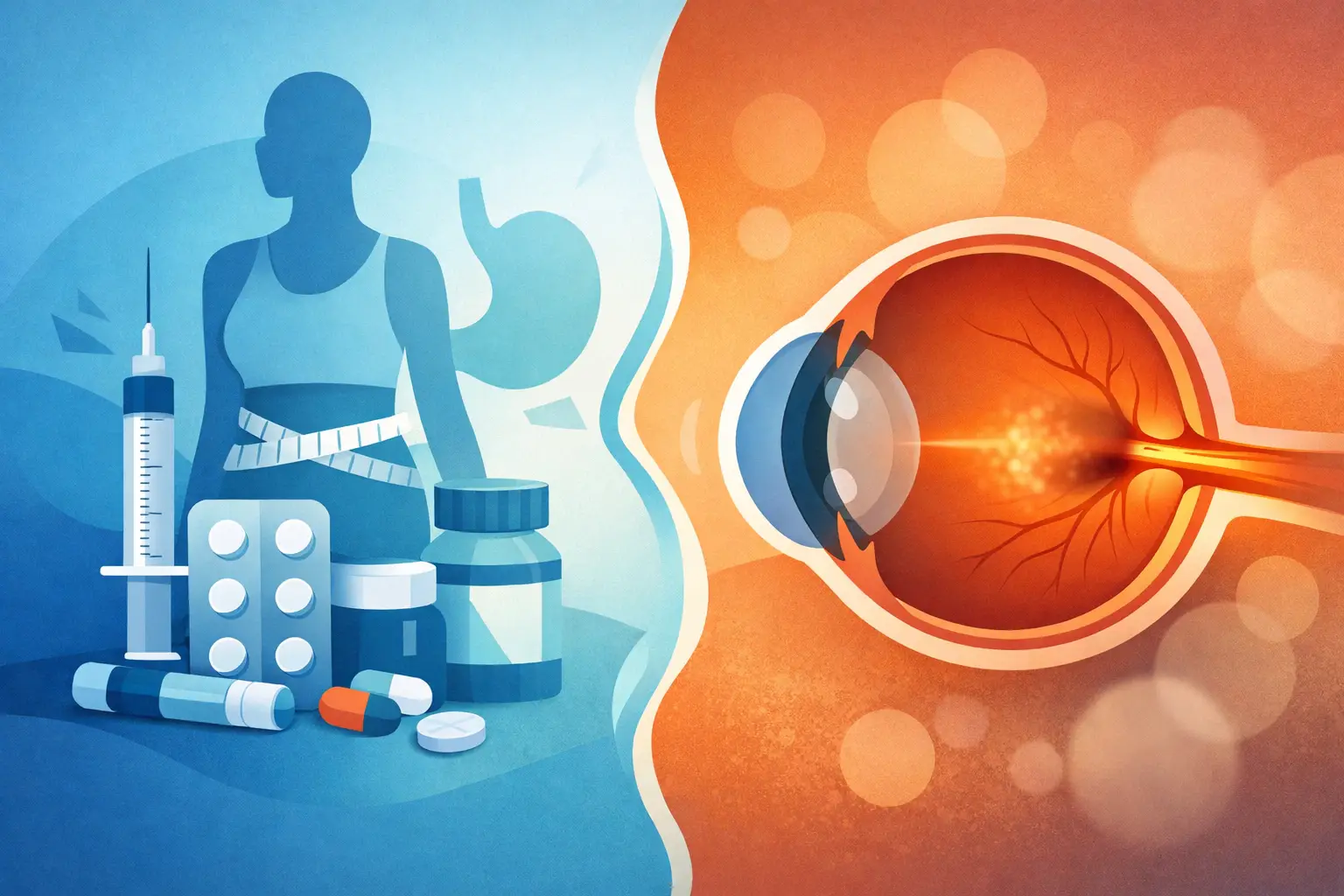
A sudden change in vision is never something to watch and wait on. If you have searched for “weight loss medication non-arteritic ischaemic optic neuropathy”, you may be concerned about reports linking some newer weight loss medicines with a serious eye condition called non-arteritic anterior ischaemic optic neuropathy, or NAION.
These reports deserve a calm, evidence-based conversation. Weight loss medicines can offer major health benefits for some people, particularly where obesity, type 2 diabetes or cardiovascular risk are involved. But any possible change in vision while taking a medicine needs prompt assessment. The right response is not panic, and it is not stopping prescribed treatment without advice. It is getting the symptoms checked urgently and speaking with the doctor who prescribes your medication.
What is non-arteritic ischaemic optic neuropathy?
NAION occurs when blood flow to the optic nerve is reduced. The optic nerve carries visual information from the eye to the brain, so damage to it can cause permanent loss of vision. “Non-arteritic” means the condition is not caused by giant cell arteritis, an inflammatory blood-vessel disease that requires immediate medical treatment.
NAION most often affects people over 50, although it can occur earlier. It commonly presents as sudden, painless loss or dimming of vision in one eye. Some people notice a dark or grey patch, often in the lower or upper part of their vision, while others wake up and find that one eye is noticeably blurrier.
It is not the same as a temporary blur from dry eyes, a changing glasses prescription or visual strain. A person with NAION may still see reasonably well in parts of their vision, which can make the change easy to underestimate. That is one reason a new visual field defect needs urgent attention.
Why are weight loss medicines being discussed?
The recent discussion has focused largely on medicines known as GLP-1 receptor agonists, including semaglutide. These medicines may be prescribed for diabetes and, in certain circumstances, weight management. They work in part by reducing appetite, slowing stomach emptying and helping improve blood glucose control.
Some observational research has reported an association between semaglutide use and NAION in particular patient groups. An association does not prove that a medicine causes the condition. People taking these medicines may already have a higher rate of diabetes, high blood pressure, sleep apnoea, high cholesterol and cardiovascular disease – all of which can independently increase NAION risk.
Research findings are still being examined, and results have not been identical across all studies. There may also be differences between medicines, doses, patient populations and the way a study is designed. For patients, the practical message is measured: NAION appears to be uncommon, but the symptom of sudden vision loss is urgent regardless of its cause.
Do not stop or alter a weight loss medicine on the basis of online reports alone. Stopping suddenly may affect diabetes management or other health goals. Your GP, endocrinologist or prescribing clinician can weigh your individual benefits and risks, particularly if you have existing eye or vascular health concerns.
Weight loss medication and NAION risk factors
NAION is usually not explained by one factor alone. It is more often seen in people with a combination of anatomical and health-related risks. Some people have a naturally crowded optic nerve head, sometimes described as a “disc at risk”. This cannot be identified by looking in the mirror, but it may be seen during a comprehensive dilated eye examination.
Other factors that can contribute include diabetes, high blood pressure, high cholesterol, obstructive sleep apnoea and smoking. Episodes of low blood pressure overnight may also be relevant for some people. This is why your eye care provider may ask about sleep quality, snoring, CPAP treatment, medications and the timing of blood pressure tablets.
Rapid changes in blood sugar, dehydration, vomiting or poor food and fluid intake can also make a person unwell while using weight loss medication. They do not automatically mean NAION will occur, but they are reasons to contact your prescriber. Safe weight management should include appropriate nutrition, hydration and regular medical review rather than pushing through severe side effects.
Having diabetes does not mean you will develop NAION, and taking a GLP-1 medicine does not mean vision loss is expected. Individual risk depends on your full medical picture. That is why coordinated care between your GP, prescribing doctor, optometrist and ophthalmologist matters.
Symptoms that need urgent eye care
Seek same-day urgent assessment if you experience a sudden change in vision in either eye. This includes a dark curtain or shadow, a missing patch of vision, sudden blurring that does not clear, colours appearing less vivid, or a marked difference in vision between your two eyes.
NAION is often painless, but painful vision loss is urgent too. So are flashing lights, a large increase in floaters, a red painful eye, double vision, facial weakness, trouble speaking, severe headache or weakness in an arm or leg. These symptoms can have several causes, including retinal detachment, acute glaucoma, stroke or giant cell arteritis.
If vision loss is sudden or severe, attend an emergency department immediately. If you are unsure whether a change is urgent, call an optometrist or medical service straight away for guidance. Do not drive yourself if your vision is impaired.
What happens at an eye examination?
A thorough eye assessment can help determine whether the optic nerve, retina or another part of the visual system is affected. Your optometrist may check vision in each eye, pupils, eye pressure, colour vision and peripheral vision. Photographs and scans of the optic nerve and retina can provide valuable detail, and dilating drops may be needed to examine the back of the eye properly.
If NAION or another urgent condition is suspected, prompt referral to an ophthalmologist or hospital is required. The assessment may also involve blood tests or medical investigations to rule out arteritic causes and to identify related health risks.
At Boda Family Eye Care, our approach is to listen carefully to what has changed, assess your eyes thoroughly and help coordinate urgent referral when needed. Bringing a list of all medicines, including injections, supplements and the dose you take, can make that process faster and safer.
If you take weight loss medication
Keep your routine eye examinations, especially if you have diabetes, high blood pressure or a family history of eye disease. A routine examination cannot predict every eye emergency, but it can document the health of your optic nerves and detect other concerns such as diabetic eye disease, glaucoma or retinal changes.
Tell both your prescriber and eye care provider about your complete health history. Mention previous optic nerve problems, sleep apnoea, migraines, cardiovascular disease and any prior episodes of unexplained visual disturbance. If you have had NAION in one eye, your medical team can discuss the implications for your other eye and medication choices in more detail.
It is also sensible to manage the foundations of eye and general health: attend reviews for blood pressure, diabetes and cholesterol; use CPAP if it has been prescribed for sleep apnoea; avoid smoking; and maintain regular meals and fluids where this suits your treatment plan. These steps support more than your eyesight.
A new weight loss prescription should be part of a broader health plan, not a reason to delay raising concerns. If your vision seems different, trust that instinct. Prompt assessment gives your eye care team the best chance to identify the cause and guide you to the right care.