
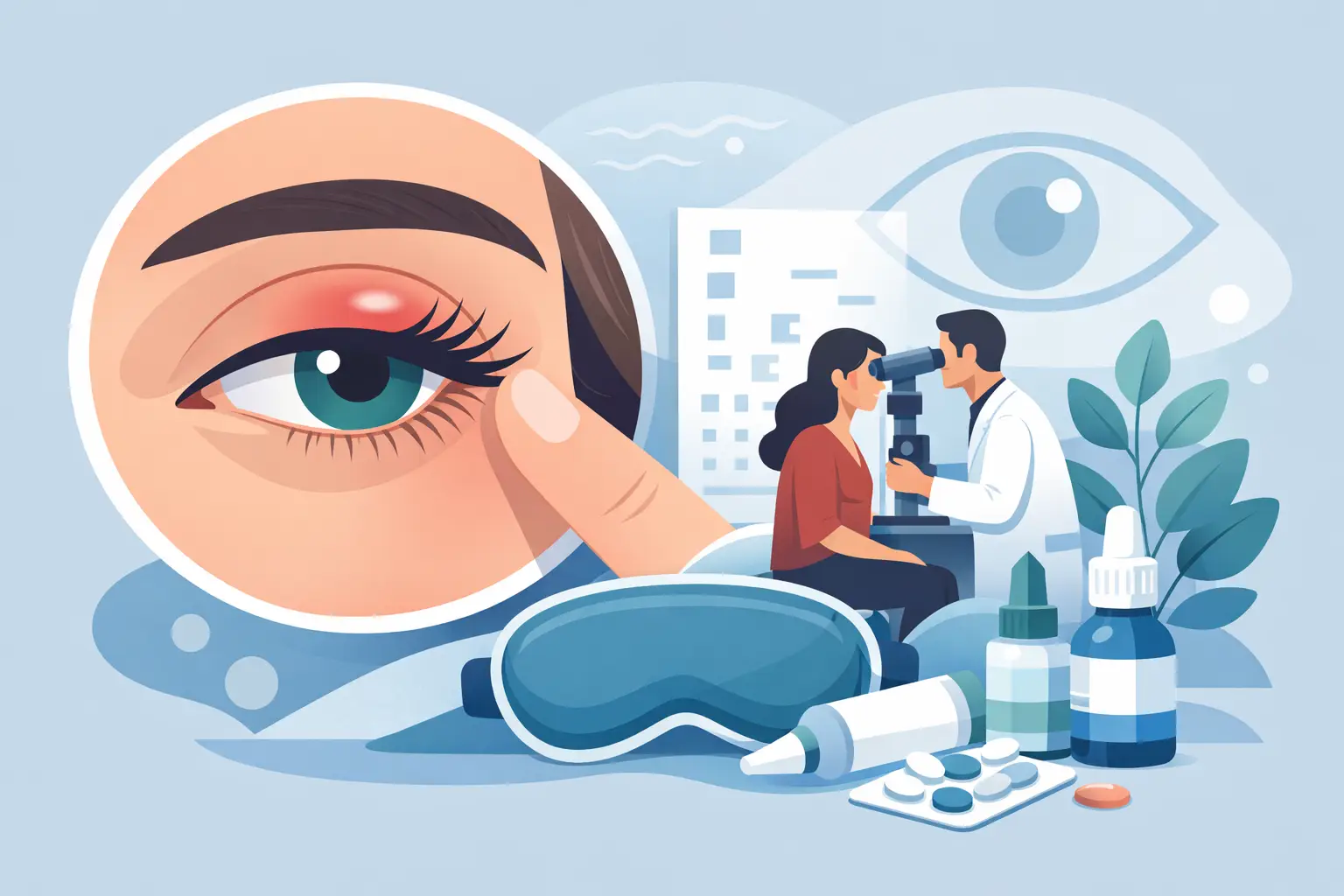
A tender lump on the edge of your eyelid can make blinking, reading and wearing glasses feel surprisingly uncomfortable. A stye is common and usually settles with simple care, but some eyelid lumps need professional assessment – particularly when pain, swelling or redness is getting worse.
At Boda Family Eye Care, we assess eye discomfort carefully so you can understand what is happening, what you can safely do at home, and when further treatment is needed.
What is a stye?
A stye, also called a hordeolum, is an inflamed or infected oil gland in the eyelid. It often appears as a small, red, painful bump near the base of an eyelash. Some styes form on the inside of the eyelid and may cause more general lid swelling rather than a clearly visible spot.
Your eyelids contain tiny glands that produce oils to support a healthy tear film. When one becomes blocked, bacteria can multiply and inflammation can develop. This can leave the lid sore to touch, watery, swollen or irritated, sometimes with a small yellow or white point.
A stye is different from a chalazion, although the two can look similar. A chalazion is usually a blocked oil gland that causes a firmer lump and is often less painful. A stye can occasionally develop into a chalazion after the initial tenderness settles.
Why styes happen
Styes can occur without an obvious cause. Touching your eyes with unwashed hands, sleeping in eye makeup, using old cosmetics, or rubbing irritated eyelids may increase the chance of blockage and infection.
They can also be more likely when someone has ongoing eyelid inflammation, dry eye disease, skin conditions such as rosacea, or a history of recurrent blocked glands. For contact lens wearers, careful hand hygiene and following the recommended lens replacement schedule are especially important.
Having one stye does not mean you have poor hygiene. However, repeated styes are worth checking because they may point to an underlying eyelid or tear-film issue that can be treated.
Stye treatment at home: warm compresses first
For a straightforward stye, gentle warmth is usually the most useful first step. A warm compress can soften oils within the blocked gland and encourage natural drainage.
Wet a clean washcloth with comfortably warm water, then wring it out so it is damp rather than dripping. Hold it over the closed eyelid for around 10 minutes. Re-warm the cloth as it cools, and repeat this three to four times a day. Check the temperature on the inside of your wrist first – it should feel soothing, never hot.
After the warm compress, you may gently massage the eyelid towards the lash line with clean hands. Keep the pressure light. The aim is to support drainage, not to force anything out.
Avoid squeezing, popping or puncturing a stye. This can worsen inflammation, spread infection and injure the delicate eyelid tissue. It is also best to pause eye makeup and contact lens wear until the lid has settled. Replace any eye makeup that may have been used while the stye was active, particularly mascara and eyeliner, rather than risking reinfection.
Do not share towels, face washers or eye cosmetics with others. While a stye itself is not typically considered highly contagious, bacteria from the eyelid can still be transferred through poor hand and face hygiene.
When a stye needs an eye examination
Many styes begin to improve within a few days and resolve over one to two weeks. If yours is not improving, keeps returning, or leaves a lump that persists, an optometrist can examine the eyelid and the surface of the eye.
A thorough assessment helps confirm whether the lump is a stye, chalazion, cyst or another eyelid concern. Your optometrist can also look for signs of blepharitis, dry eye, meibomian gland dysfunction or other causes of repeated blockage.
Treatment depends on what is found. Sometimes ongoing warm compresses and targeted lid hygiene are enough. In other cases, prescription treatment or referral to an ophthalmologist may be appropriate. Antibiotic drops or ointments are not needed for every stye, so it is best not to use leftover medication or someone else’s prescription.
For people who experience frequent eyelid blockage alongside dry, gritty or burning eyes, addressing the underlying gland function can make a real difference. A personalised dry eye assessment can identify whether the tear film or eyelid glands need ongoing support.
Do not wait if you notice these warning signs
A stye should cause localised eyelid discomfort, not severe illness or major changes in your vision. Seek urgent eye care or medical attention if you develop worsening pain, rapidly spreading redness or swelling around the eye, fever, reduced vision, double vision, significant light sensitivity, or pain when moving the eye.
You should also arrange prompt assessment if the eye itself becomes very red, the eyelid is swollen shut, or you are unsure whether the problem is a stye. These symptoms can occasionally indicate a more serious infection or eye condition that needs timely treatment.
Parents should take eyelid swelling seriously in children, especially when there is fever, lethargy, a painful eye or difficulty opening the lid. Children may not be able to explain changes in their vision clearly, so an examination provides reassurance and helps rule out more significant concerns.
Reducing the chance of another stye
If styes recur, small daily habits can help protect the eyelids. Remove eye makeup thoroughly before bed, wash hands before touching your eyes and avoid rubbing your eyelids when they feel itchy or dry. Keep contact lenses clean, follow the replacement instructions, and never rinse lenses or lens cases with tap water.
If you use eye makeup, replace products regularly and avoid applying eyeliner along the inner lid margin, where the oil gland openings sit. This is particularly helpful for people prone to dry eye or blocked meibomian glands.
Some people benefit from a regular eyelid hygiene routine, especially if they have crusting around the lashes, oily lids or recurring irritation. The right routine is not the same for everyone. Over-cleaning or using harsh products can irritate the skin and eye surface, so it is sensible to ask for advice tailored to your symptoms.
A stye can be small, but it should not be ignored if it is painful, persistent or affecting your sight. Gentle warm compresses and clean eyelid habits are often enough to help it settle. If it is not improving or something does not feel right, arranging an eye examination is the safest next step for clear, comfortable vision.