
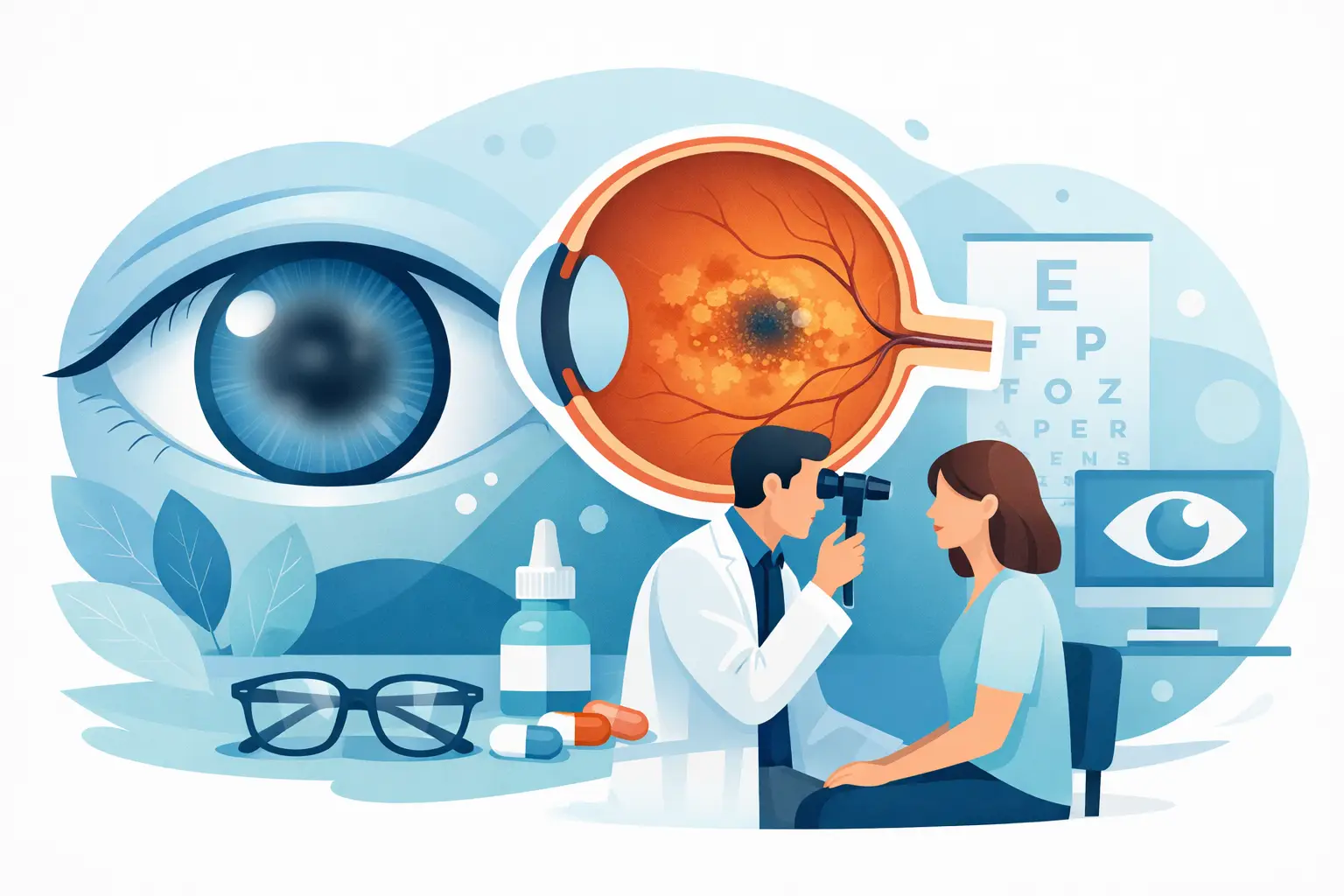
Reading a text message, recognising a familiar face across the room, or seeing the detail in a recipe can all become harder when the macula is affected. Macular degeneration is a common eye condition that damages the central part of the retina, the light-sensitive tissue at the back of the eye responsible for sharp, detailed vision. It does not usually cause total blindness, but it can significantly affect independence and everyday confidence if it progresses.
The reassuring news is that regular eye examinations can detect changes before you notice a major difference in your sight. For people living in Auburn, Parramatta, Lidcombe and surrounding Western Sydney suburbs, having eye health checked routinely is one of the most practical ways to protect vision over time.
What is macular degeneration?
The macula is a small area near the centre of the retina. It gives us the focused vision needed for reading, driving, recognising faces, watching television and seeing fine detail. When the macula deteriorates, central vision may become blurred, distorted or patchy, while side vision usually remains.
Age-related macular degeneration, often shortened to AMD, is the most common form. It becomes more likely as we get older, particularly after age 50. However, age is not the only factor. Family history, smoking, cardiovascular health, diet and long-term sun exposure can also influence risk.
AMD is generally grouped into two forms: dry and wet. Dry macular degeneration is more common and usually develops gradually. It involves thinning and ageing changes in the macula, sometimes with small deposits called drusen visible during an eye examination.
Wet macular degeneration is less common but can progress more quickly. Abnormal blood vessels grow beneath the retina and may leak fluid or blood, causing sudden distortion or a rapid drop in central vision. This form needs urgent assessment and treatment by an ophthalmologist to give the best chance of preserving sight.
Signs of macular degeneration to take seriously
Early macular degeneration may have no obvious symptoms. This is why a person can feel that their eyesight is fine while early retinal changes are already present. Eye testing is about more than checking whether you need new glasses. A thorough examination allows your optometrist to assess the health of the retina and macula.
As macular changes develop, you may notice that words seem less crisp, colours appear less bright, or you need stronger lighting for close work. Straight lines may start to look bent or wavy, such as grout lines in the bathroom, window frames, power lines or the edge of a kitchen bench.
Other warning signs include a blurred or dark patch in the centre of vision, difficulty recognising faces, reduced contrast in dim light, or a sudden change in one eye. Symptoms can be subtle because the stronger eye may compensate for the weaker one. Covering one eye at a time while looking at a familiar object can sometimes reveal a difference you had not noticed.
A sudden onset of distortion, a dark central spot, or a noticeable reduction in vision should be treated as urgent. Do not wait to see whether it settles or assume it is simply a change in your glasses prescription. Prompt eye assessment can be particularly important where wet macular degeneration is suspected.
Who is at higher risk?
Getting older does not mean macular degeneration is inevitable, but risk rises with age. A close relative with AMD is another important reason to keep up regular eye checks, as family history can increase your likelihood of developing the condition.
Smoking is one of the strongest modifiable risk factors. Stopping smoking benefits the eyes as well as the heart and lungs, and it is worthwhile at any age. High blood pressure, high cholesterol and other cardiovascular conditions may also affect the small blood vessels that support the eye.
Lifestyle cannot guarantee that macular degeneration will not occur, but it can support overall eye health. A balanced diet with leafy green vegetables, colourful fruit and vegetables, fish or other healthy sources of omega-3 fats, and regular physical activity is sensible for many people. Sunglasses that provide good UV protection are also a practical habit when outdoors.
Supplements are not suitable for everyone and should not be started simply because a friend takes them. Specific vitamin formulations may be recommended for some stages of AMD, but the right choice depends on your eye findings, health history and medications. A personalised discussion with your optometrist, GP or ophthalmologist is safer than self-prescribing.
How eye examinations help protect central vision
A comprehensive eye examination can identify drusen, pigment changes and other early signs of macular disease that cannot be seen by looking in the mirror or noticing a change in reading vision. Your optometrist may use retinal photography, optical coherence tomography imaging and other clinical tests to assess the macula in detail.
These images provide a valuable baseline. If there are early changes, repeat scans can help identify whether the condition is stable or progressing. The appropriate review schedule varies. Someone with no signs of disease may only need routine examinations, while a patient with early AMD, a strong family history or new symptoms may need closer monitoring.
At Boda Family Eye Care, comprehensive examinations focus on both your prescription and the health of your eyes. If results suggest wet macular degeneration or another retinal concern, timely referral and communication with the appropriate eye specialist is an essential part of care.
What happens if macular degeneration is diagnosed?
A diagnosis can feel worrying, especially if you have watched a family member lose vision. The next steps depend on the type and stage of disease. Many people with early dry AMD maintain useful vision for years with monitoring, risk-factor management and practical adjustments to lighting or magnification where needed.
Wet AMD is managed by an ophthalmologist, commonly with injections into the eye that help control leaking blood vessels. While this may sound confronting, treatment has transformed outcomes for many patients. Early treatment is critical, which is why sudden distortion or vision loss should never be ignored.
Even when central vision is reduced, support is available. Updated spectacles may assist with the vision that remains, while magnifiers, brighter task lighting, larger print settings and low-vision services can make daily tasks more manageable. The goal is not only to measure vision, but to help you continue doing the things that matter to you.
When should you book an eye examination?
Adults over 50 should have regular comprehensive eye examinations, even if they do not currently wear glasses. Earlier or more frequent checks may be appropriate if you smoke, have a family history of macular degeneration, have diabetes or cardiovascular risk factors, or have noticed any change in vision.
Book promptly if lines appear wavy, faces seem harder to recognise, reading becomes unexpectedly difficult, or there is a new blurred or dark area in your central sight. If the change is sudden, seek urgent eye care on the same day where possible. It is always better to have a concerning symptom assessed than to miss a time-sensitive retinal problem.
Your central vision supports so many ordinary moments: seeing a child’s expression, reading a medicine label, finding your way at the shops and enjoying the faces around your table. A regular eye examination is a small appointment that can make a meaningful difference to how confidently you see them.