
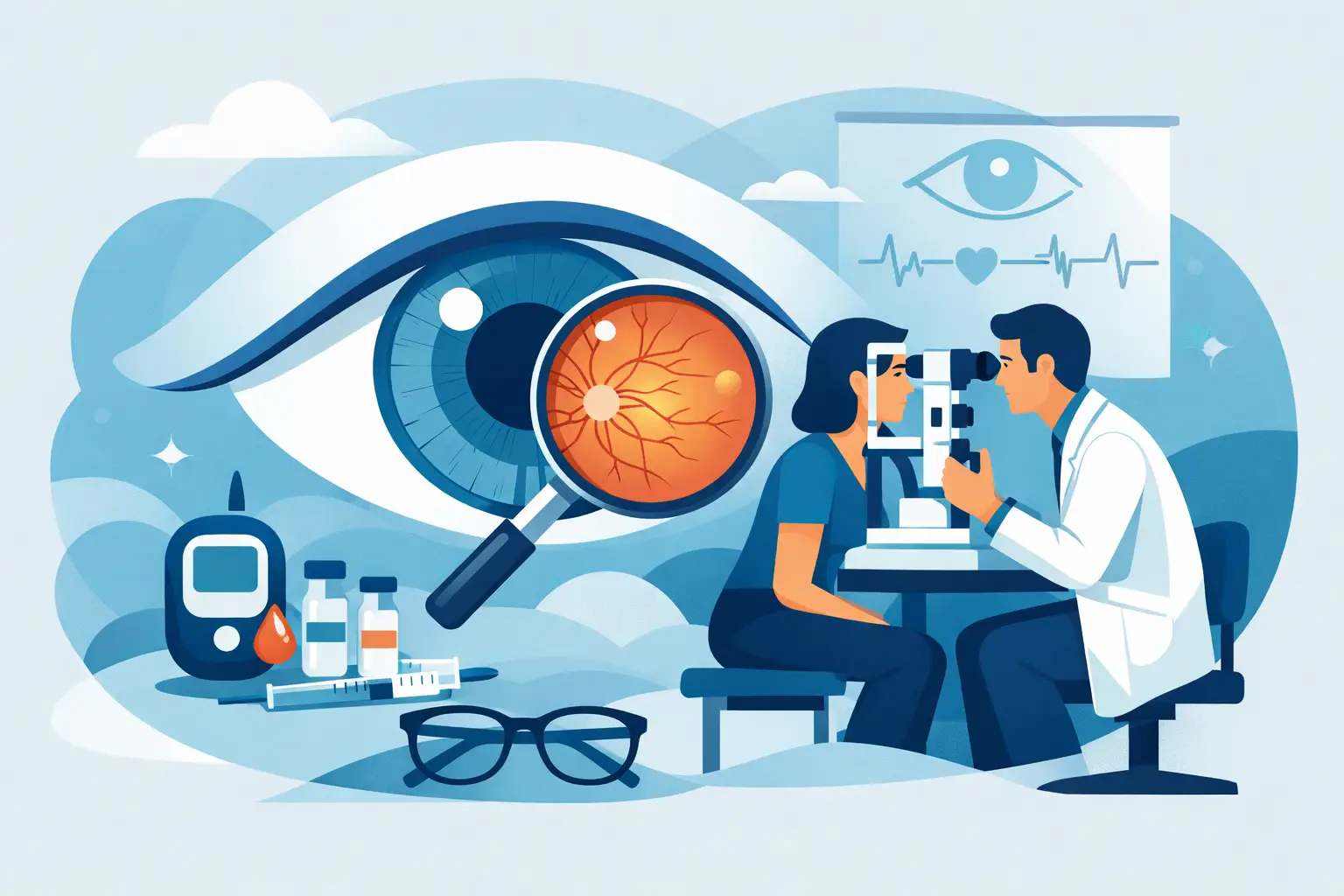
For people living with diabetes, clear vision can create a false sense of security. You may be reading comfortably, driving confidently and noticing no change at all, while early damage is developing at the back of the eye. That is the real diabetic eye checks importance: they can find changes before they affect the way you see.
Diabetes affects blood vessels throughout the body, including the tiny, delicate vessels in the retina. The retina is the light-sensitive tissue lining the back of the eye. It sends visual information to the brain, so its health is essential for everyday tasks, from recognising faces to safely navigating the road.
A regular eye examination is not simply about updating your glasses. For people with diabetes, it is an important part of ongoing health care that can help protect sight over the long term.
Why diabetic eye checks matter even when vision feels normal
Diabetic retinopathy is one of the most common diabetes-related eye conditions. It occurs when high blood glucose levels damage the retinal blood vessels. These vessels may weaken, leak fluid or bleed. In some cases, the eye grows new abnormal blood vessels, which are fragile and can cause more serious problems.
The early stages often have no obvious symptoms. That is why waiting for blurred vision, floaters or dark patches is not a safe approach. By the time vision changes become noticeable, the condition may be more advanced and require more urgent management.
A comprehensive diabetic eye examination allows your optometrist to look closely at the retina and assess whether there are any early signs of damage. Depending on your needs, this may include retinal photography, dilated pupil examination or detailed imaging of the macula, the central part of the retina responsible for sharp vision.
Early detection does not always mean treatment is needed immediately. Sometimes the right plan is careful monitoring alongside better diabetes management. The value lies in knowing what is happening and acting at the appropriate time.
Diabetes can affect more than the retina
Retinal changes are a major concern, but they are not the only reason for regular eye care. Diabetes can also increase the risk of cataracts, glaucoma and changes in prescription.
Blood glucose levels that are fluctuating can temporarily alter the shape of the eye’s natural lens. This may cause vision to go in and out of focus, making it difficult to know whether a new glasses prescription is genuinely needed. If your blood glucose has recently been unstable, your optometrist may recommend stabilising it before making a significant prescription change.
Diabetes can also contribute to dry, irritated eyes. Reduced tear quality, changes to the corneal nerves and some medications can all play a part. Persistent grittiness, stinging, redness or fluctuating vision deserves assessment, particularly when you are already managing diabetes.
How often should you have a diabetic eye examination?
For most people with diabetes, an eye examination at least once a year is recommended. However, the right interval depends on your individual eye findings, type of diabetes, how long you have had it and how well your blood glucose and blood pressure are managed.
Your optometrist or ophthalmologist may ask you to return sooner if there are retinal changes, if your vision has altered, or if you are pregnant or planning pregnancy. Pregnancy can bring faster changes in diabetic retinopathy for some people, so it is sensible to arrange an eye check early and follow the advice of your health care team.
People with type 1 diabetes should arrange regular eye checks after diagnosis according to their doctor’s advice. People with type 2 diabetes may have had diabetes for some time before it was diagnosed, which is why an eye examination soon after diagnosis is particularly worthwhile.
The practical message is simple: do not rely on a fixed schedule you heard years ago. Ask when your next review should be, and put it in the diary before you leave.
What happens during a diabetic eye check?
A thorough appointment starts with a conversation. Your optometrist may ask about your diabetes, recent blood glucose control, medications, blood pressure, cholesterol, past eye history and any symptoms. Bringing a current medication list can be helpful.
Your vision and prescription are checked, but the clinical focus extends beyond the chart on the wall. The examination may include checking eye pressure, assessing the front surface of the eye and carefully examining the retina.
Eye drops are sometimes used to widen the pupils. This gives a clearer, wider view of the retina. The drops can cause temporary light sensitivity and blurry near vision for several hours, so bring sunglasses and consider arranging transport if you are unsure about driving afterwards. Your optometrist will explain what is appropriate for your appointment.
Modern retinal imaging can provide a detailed record of the back of your eyes. Comparing images over time helps identify subtle changes that may not be apparent from symptoms alone. If an issue needs specialist treatment or closer medical review, your optometrist can coordinate a referral to an ophthalmologist and communicate with your GP where appropriate.
Symptoms that need prompt attention
Regular checks are essential, but some symptoms should not wait for your next routine appointment. Contact an optometrist promptly if you notice a sudden increase in floaters, flashing lights, a shadow or curtain across your vision, sudden blurred vision, distortion in straight lines, or a noticeable loss of side vision.
A red, painful eye, severe headache with visual disturbance, or a sudden major loss of vision should be treated as urgent. These symptoms are not always caused by diabetes, but they need timely assessment.
It is also worth mentioning more gradual changes. If reading becomes harder, your prescription seems to change often, or your vision varies markedly from day to day, an examination can help separate eye-related causes from blood glucose fluctuations.
Protecting your eyes between appointments
Diabetic eye checks work best as part of a wider health plan. Keeping blood glucose, blood pressure and cholesterol within the targets set by your GP or diabetes care team can reduce the risk of retinal damage progressing. This is not about perfection. It is about steady, supported management over time.
Do not smoke, attend your regular medical reviews and take medications as prescribed. A balanced diet, regular movement and enough sleep also support overall vascular health. If managing diabetes feels overwhelming, ask your GP or diabetes educator for practical help rather than trying to carry it alone.
It is equally important to attend your eye appointments even when life is busy. Work, caring responsibilities and transport can make routine health care easy to postpone. Yet an eye check is usually straightforward, and it may identify a problem at a stage where sight can still be protected.
Personal care close to home
At Boda Family Eye Care, diabetic eye examinations are approached as part of your broader health story, not as a quick prescription check. A careful assessment, clear explanation of findings and appropriate communication with your other health providers can make ongoing eye care feel more manageable.
If it has been more than a year since your last diabetic eye examination, or you are newly diagnosed with diabetes, booking an appointment is a practical step you can take for your future vision. Your eyes may not be giving you a warning, but they still deserve regular, expert care.