
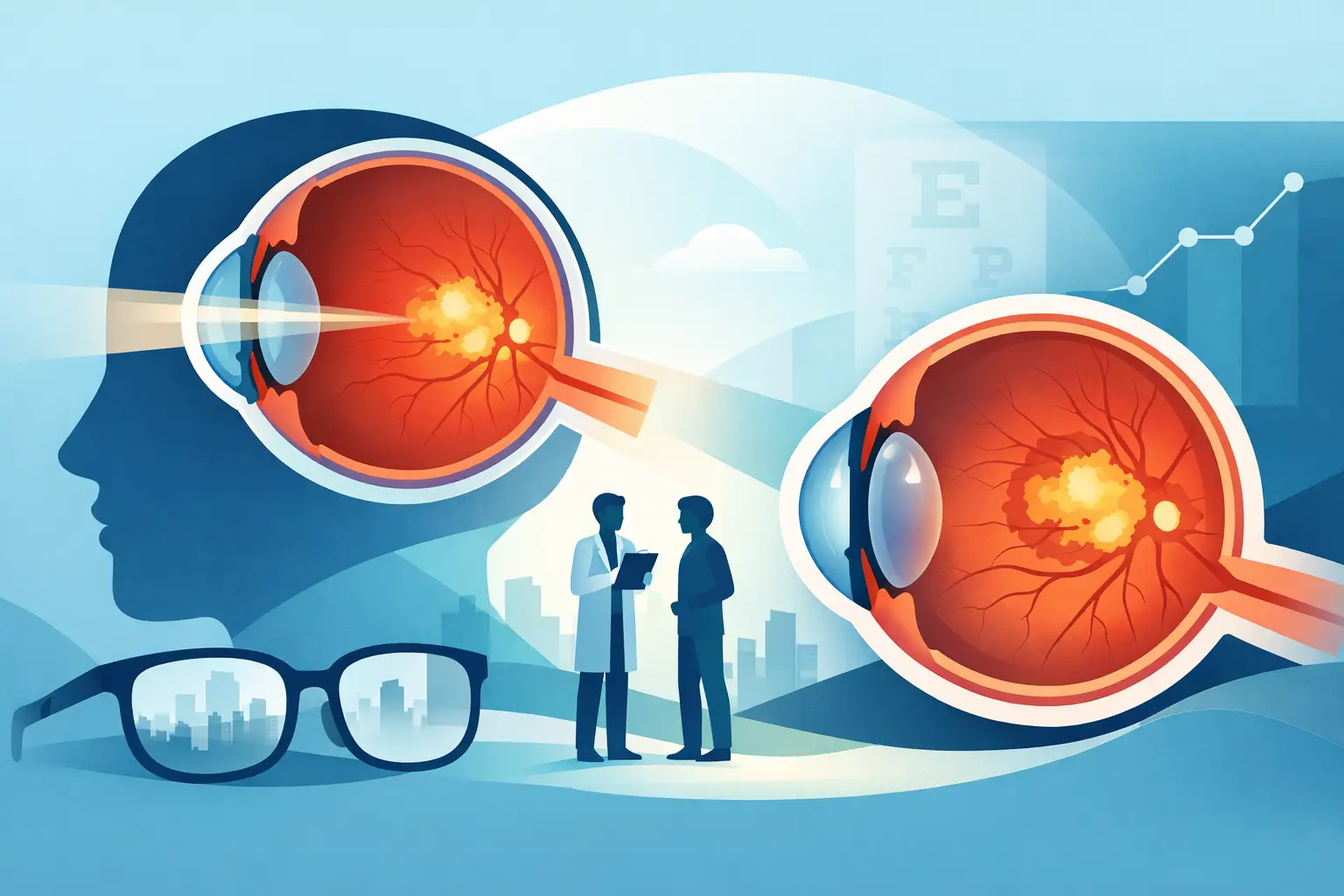
For many people, short-sightedness simply means reaching for glasses to read a street sign or recognise a face across the room. But when myopia becomes high, the eye can continue to stretch over time. This may place stress on the retina at the back of the eye and lead to myopia maculopathy, a condition that can affect detailed central vision.
Myopia maculopathy is not something every short-sighted person will develop. It is most closely associated with high myopia, often a prescription around -6.00 dioptres or stronger, although risk is not determined by prescription alone. Regular eye examinations are the best way to identify changes early, particularly for adults with high short-sightedness and children whose myopia is progressing quickly.
What is myopia maculopathy?
The macula is the small, central part of the retina responsible for sharp vision. It is what helps you read, drive, recognise faces, use a mobile and see fine detail. In high myopia, the eyeball is longer than usual. As it lengthens, the retina, choroid and other delicate tissues at the back of the eye can become stretched and thinner.
Myopia maculopathy, also called pathological myopia or myopic macular degeneration in some settings, describes degenerative changes caused by this stretching. These changes can range from mild areas of thinning to more serious damage involving the macula.
The term can sound alarming, and it deserves careful attention, but it does not mean that vision loss is inevitable. The outlook depends on the type and extent of retinal change, whether it is stable, and whether complications such as abnormal blood vessel growth are present. Monitoring lets your optometrist recognise changes and arrange timely specialist care where needed.
Why high myopia needs ongoing care
A glasses prescription tells us how much focusing correction you need. It does not show the whole story of eye health. Two people with similar prescriptions may have different eye lengths, retinal appearance and levels of risk.
High myopia is associated with a greater likelihood of several eye conditions, including retinal tears or detachment, glaucoma, cataract and myopia-related macular changes. This is why a thorough eye examination is more than a prescription check. It may include retinal imaging, an assessment of the optic nerve and, where appropriate, optical coherence tomography (OCT). OCT creates detailed cross-sectional images of the retina, helping clinicians assess layers that cannot be judged fully from a standard vision test alone.
For patients in Auburn and surrounding Western Sydney suburbs, regular care close to home can make ongoing monitoring much easier. Your examination schedule should be personalised. Someone with stable moderate myopia may need routine reviews, while a person with high myopia, known retinal changes or new symptoms may need more frequent assessment or referral to an ophthalmologist.
Changes that may occur at the macula
Myopia maculopathy can involve several types of changes. Early signs may include a pale or thinned appearance in areas at the back of the eye. In more advanced cases, patches of tissue loss can develop, or the retina may form folds or traction-related changes as the eye lengthens.
One complication that requires prompt attention is myopic choroidal neovascularisation. This occurs when abnormal blood vessels grow beneath or within the retina. These vessels can leak or bleed, causing a sudden decline or distortion in central vision. Ophthalmologists can often treat this condition with injections that reduce abnormal vessel activity, and earlier treatment generally offers the best chance of protecting sight.
Not every retinal change has a treatment that can reverse it. That is precisely why monitoring matters. It allows your eye care team to distinguish stable changes from active problems that need urgent management.
Symptoms that should not wait
Myopia maculopathy may cause no noticeable symptoms in its early stages. Some people only become aware of a problem when one eye is covered during an examination. Checking each eye separately from time to time can help you notice a meaningful difference.
Arrange an eye examination promptly if you notice blurred or reduced central vision, straight lines appearing bent or wavy, a grey or dark patch near the centre of vision, new difficulty reading despite wearing the correct glasses, or a noticeable difference in vision between your eyes. These symptoms do not always mean myopia maculopathy, but they need assessment.
A sudden shower of floaters, flashing lights, or a curtain or shadow moving across your vision can indicate a retinal tear or detachment. This is an eye emergency. Seek urgent eye care immediately rather than waiting for your next routine appointment.
How an eye examination helps protect vision
A comprehensive examination looks beyond whether you can read the chart. Your optometrist will discuss changes in your vision, your prescription history and relevant family or medical history. Dilating eye drops may be recommended to give a wider, clearer view of the retina. The drops can temporarily blur close vision and increase light sensitivity, so it is wise to ask whether you should arrange someone else to drive you home.
Retinal photographs and OCT scans can provide a useful baseline. Comparing images over time helps identify subtle progression that may not yet affect your day-to-day vision. If there are concerning findings, your optometrist can coordinate referral to an ophthalmologist for further investigation and treatment.
At Boda Family Eye Care, comprehensive examinations are designed to give patients clear answers about both their vision and eye health. If you have a strong myopia prescription or have been told you have retinal changes, mention this when booking so the appointment can be tailored to your needs.
Can myopia maculopathy be prevented?
There is no guaranteed way to prevent myopia maculopathy once an eye is highly myopic, and lifestyle changes cannot shorten an already elongated eye. However, reducing the progression of myopia in childhood may lower the chance of very high myopia later in life.
For children, time outdoors, sensible near-work habits and regular vision checks are practical starting points. More time outside is associated with a lower risk of myopia onset in children, although it is not a substitute for prescribed treatment when myopia is progressing. Depending on the child’s age, prescription and rate of change, myopia control options may include specialised spectacle lenses, contact lenses or low-dose atropine treatment prescribed in collaboration with the appropriate practitioner.
For adults, the focus is usually on monitoring rather than trying to reverse myopia. Wearing an accurate prescription supports comfortable, clear vision, but glasses and contact lenses do not stop eye elongation in adults or treat retinal changes. A healthy lifestyle, not smoking and managing general health conditions such as high blood pressure and diabetes are sensible steps for overall eye health, but they do not replace retinal reviews.
Practical questions patients often ask
Is myopia maculopathy the same as age-related macular degeneration?
No. Both conditions can affect central vision and the macula, but they have different underlying causes. Age-related macular degeneration is linked to ageing changes in the macula. Myopia maculopathy is related to structural stretching and degeneration in a highly myopic eye. An eye examination and retinal imaging help determine what is causing macular changes.
Can laser eye surgery prevent it?
Laser refractive surgery can reduce dependence on glasses or contact lenses for suitable patients, but it reshapes the front surface of the eye. It does not shorten the eye or remove the retinal risks linked with high myopia. Even after laser surgery, people with a history of high myopia should continue regular retinal examinations.
How often should I be checked?
It depends on your prescription, retinal findings, age and symptoms. Many people benefit from an annual comprehensive eye examination, but your optometrist may recommend a shorter interval if you have high myopia or established macular changes. New distortion, a blind spot or a sudden change in vision should be assessed sooner.
Clear, comfortable sight is worth protecting at every stage of life. If you or your child has progressing or high short-sightedness, a thorough eye examination can provide a baseline, a monitoring plan and reassurance about the next right step.