
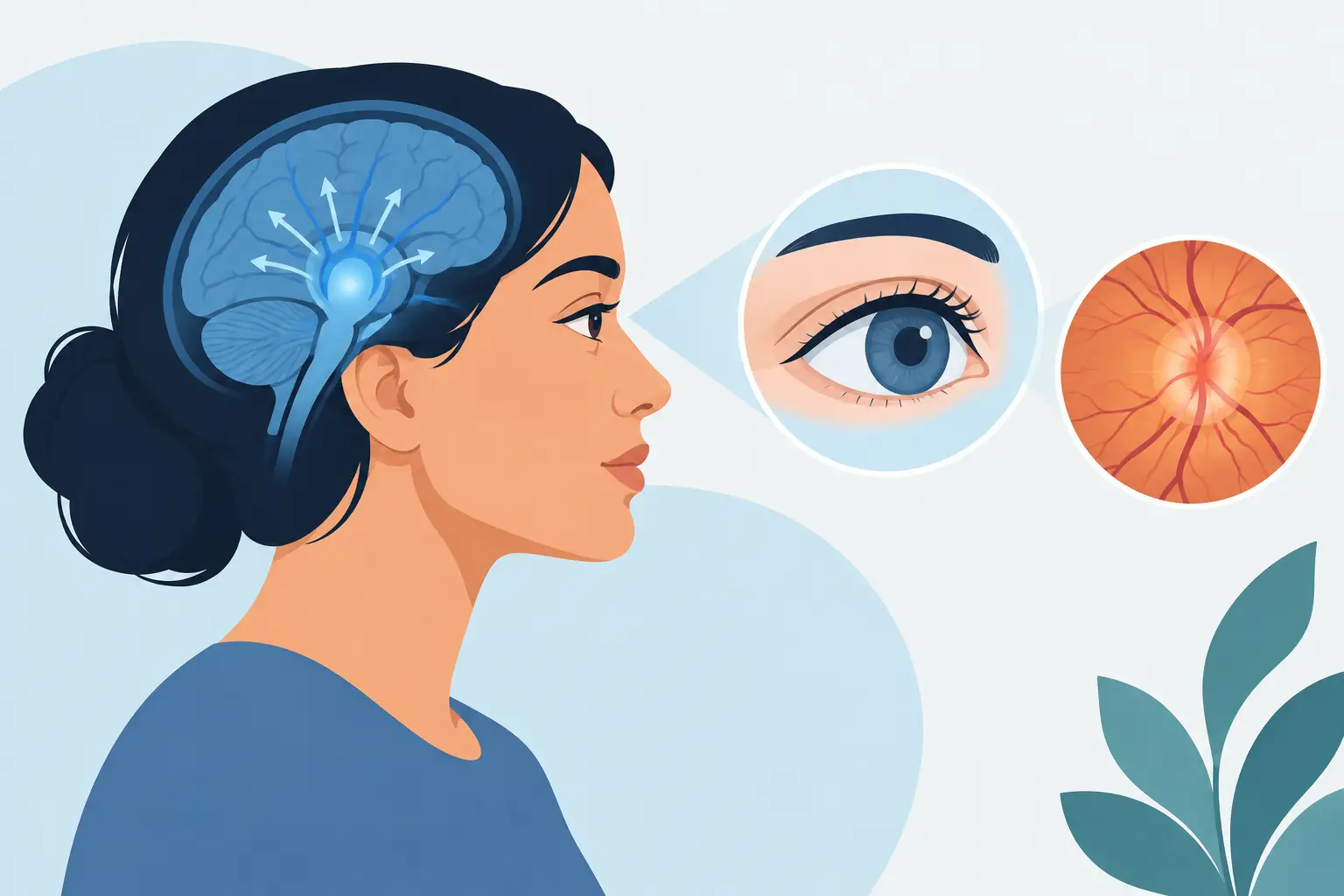
A persistent headache is easy to put down to stress, poor sleep or a busy week. But when it comes with brief episodes of dimmed vision, double vision, a pulsing sound in the ears or unexplained visual changes, it needs prompt medical attention. Idiopathic intracranial hypertension is an uncommon condition involving raised pressure around the brain that can affect the optic nerves and, without appropriate care, put sight at risk.
For patients, the name can sound alarming. The practical priority is simpler: recognise the warning signs, arrange an urgent assessment, and keep all recommended eye and medical follow-up appointments. Clear communication between your optometrist, GP and eye specialist is an important part of protecting vision.
What is idiopathic intracranial hypertension?
Idiopathic intracranial hypertension, often shortened to IIH, occurs when pressure inside the skull rises without an obvious cause such as a brain tumour or infection. Cerebrospinal fluid normally cushions the brain and spinal cord. In IIH, the pressure of this fluid is elevated.
The increased pressure can cause swelling at the head of the optic nerve, known as papilloedema. The optic nerve carries visual information from the eye to the brain. If swelling is significant or persists, it can damage the nerve and lead to permanent loss of peripheral vision, and in more severe cases central vision.
IIH is more commonly diagnosed in women of childbearing age, particularly where recent weight gain has occurred, but it can affect people of different ages, body sizes and sexes. Some medicines and health conditions may also be relevant. This is why clinicians avoid making assumptions based on a person’s appearance or a single symptom. A careful medical assessment is needed.
Symptoms that should not be ignored
Headache is common in IIH, but headache alone does not mean a person has the condition. The pattern and accompanying symptoms matter. Headaches may be frequent, severe, worse on waking, or aggravated by coughing, straining or bending over. They can also resemble migraine or tension-type headaches.
Visual symptoms are particularly important. Some people notice short episodes where vision greys out, blacks out or becomes blurred, often when standing up or changing position. These episodes may last only seconds. Others develop double vision, difficulty seeing to the side, reduced clarity, flashes, or a gradual narrowing of their field of view.
Another recognised symptom is pulsatile tinnitus – hearing a rhythmic whooshing or thumping sound that seems to match the heartbeat. Nausea, neck or shoulder pain and light sensitivity can occur as well.
Seek urgent medical or eye care if you have a severe or rapidly worsening headache with visual changes, new double vision, loss of vision, or neurological symptoms such as weakness, confusion, trouble speaking or facial drooping. Sudden vision loss or severe eye pain should always be treated as urgent. Do not drive yourself if your vision is affected.
Why an eye examination can be crucial
IIH may first be suspected during an eye examination when an optometrist sees optic nerve swelling at the back of the eye. This is one reason a comprehensive eye examination is about more than checking whether glasses need updating.
Your optometrist may assess visual acuity, pupils, eye movements, colour vision and peripheral vision. Retinal photographs and optical coherence tomography, often called OCT, can provide detailed images and measurements of the optic nerve. Visual field testing maps how well you see away from the centre of your gaze, which can reveal changes you may not notice in daily life.
These tests help establish whether the optic nerve looks swollen and create a baseline for future comparison. However, optic nerve swelling has several possible causes. An eye examination can identify a concerning finding, but it cannot by itself confirm IIH or rule out serious neurological causes.
When papilloedema or other concerning signs are suspected, urgent referral for medical assessment is needed. This may involve a GP, emergency department, neurologist, ophthalmologist or neuro-ophthalmologist, depending on the situation and local care pathway.
How IIH is diagnosed
Diagnosis requires more than symptoms and an eye test. Doctors generally use brain imaging, usually MRI with imaging of the brain’s veins, to exclude other causes of raised pressure. A lumbar puncture may then be used to measure cerebrospinal fluid pressure and analyse the fluid where appropriate.
This process can feel overwhelming, especially when tests happen quickly. Asking questions is encouraged. It can help to understand what each test is looking for, who will coordinate follow-up and what symptoms should prompt you to seek help sooner.
Keep a simple record of headaches, visual episodes and medications, including non-prescription products and supplements. Bring this information to appointments. It gives your healthcare team a clearer picture of changes over time.
Treatment focuses on vision and the cause of pressure
Treatment is individualised. The immediate aim is to protect the optic nerves and prevent vision loss, while also relieving symptoms where possible. Medicines that reduce cerebrospinal fluid production are often used. Your doctor will discuss possible side effects, monitoring and whether a medicine is suitable for you, particularly if you are pregnant, planning pregnancy or breastfeeding.
For some people, gradual and supported weight management is a useful part of treatment and may reduce pressure over time. This should be approached with care and without blame. Weight is not the only factor involved in IIH, and the right plan depends on your health, medical history, access to support and personal circumstances.
If vision is deteriorating despite medical treatment, procedures or surgery may be considered by specialist teams. These can include treatments directed at protecting the optic nerve or reducing pressure. The choice is not one-size-fits-all: it depends on how quickly vision is changing, imaging results, headache burden and specialist assessment.
Headache can remain challenging even when optic nerve swelling improves. A neurologist may help manage migraine-like headaches alongside IIH treatment. Pain medicines should be used according to medical advice, as frequent use of some treatments can contribute to medication-overuse headaches.
Ongoing eye monitoring matters
A person can feel better while subtle visual field changes continue, which is why follow-up testing is so important. Depending on the severity and stability of the condition, eye examinations may be needed frequently at first and then less often once the optic nerves and visual fields are stable.
At each review, clinicians may compare optic nerve photographs or OCT scans, check vision and repeat visual field testing. This trend over time is often more informative than any single result. Attend even if symptoms have settled, and let your care team know promptly if visual symptoms return or change.
It is also worth checking the practical effects of any vision loss. Reduced peripheral vision can affect driving safety, work tasks, confidence on stairs and awareness of hazards around children or traffic. Your treating team can advise on driving restrictions and when it is safe to resume particular activities.
Practical steps while you wait for care
If IIH is being investigated, avoid dismissing new visual symptoms as just another headache. Follow the urgency advice provided by your clinician. Keep taking prescribed medicines unless the prescribing doctor tells you otherwise, and do not start or stop medications or supplements without checking first.
Bring your glasses, a list of medicines and details of any previous scans or specialist letters to appointments if you have them. If possible, take a support person with you when receiving significant test results. They can help remember instructions and ask questions you may not think of in the moment.
For Auburn and surrounding Western Sydney families, Boda Family Eye Care can provide a thorough eye assessment when concerning visual symptoms arise and arrange referral when findings require urgent medical investigation. Eye care is most effective when it works alongside your broader healthcare team.
A headache may be common, but changes in vision deserve attention. Acting early, completing the recommended investigations and keeping regular eye monitoring gives your care team the best opportunity to safeguard the sight you rely on every day.