
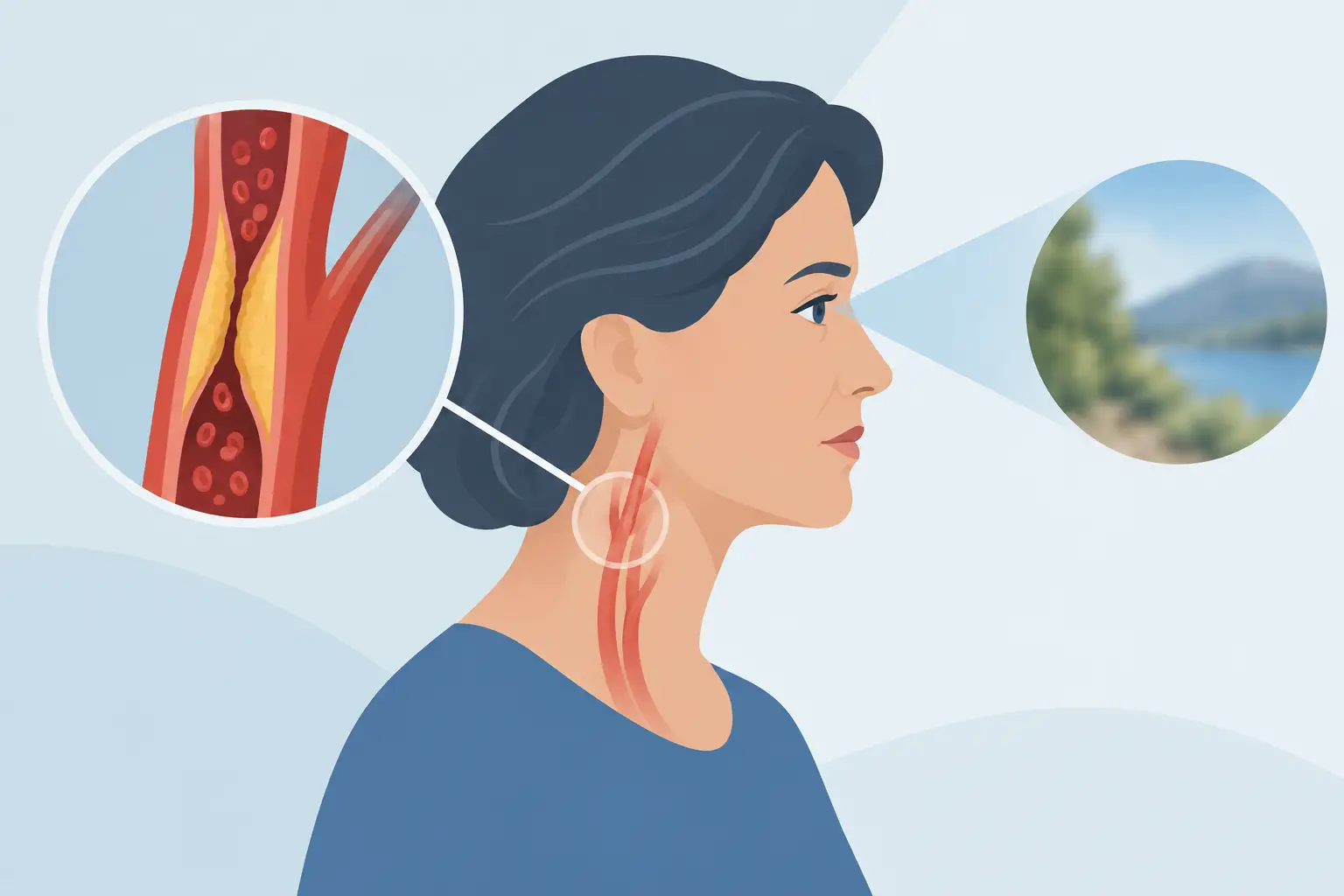
A sudden grey shadow, a curtain moving across one eye, or vision that disappears and returns within minutes should never be brushed off as tired eyes. Carotid artery stenosis and vision changes can be connected when narrowed neck arteries reduce or interrupt blood flow to the eye or brain. While many visual symptoms have less serious causes, sudden loss of vision requires urgent medical assessment.
What is carotid artery stenosis?
The carotid arteries are major blood vessels on each side of the neck. They carry oxygen-rich blood from the heart to the brain, face and eyes. Carotid artery stenosis means one of these arteries has become narrowed, most often due to a build-up of fatty material called plaque.
Over time, plaque can restrict blood flow or shed tiny particles that travel through the bloodstream. If these particles reach the eye, they can block a retinal blood vessel. If they reach the brain, they may cause a transient ischaemic attack, often called a TIA, or a stroke.
This is why an unexpected change in sight can sometimes be more than an eye problem. It may be an early warning sign of vascular disease that needs prompt attention.
How carotid artery stenosis can affect vision
The most recognised visual symptom is temporary loss of vision in one eye, sometimes called amaurosis fugax. People often describe it as a dark shade, blind, curtain or fog coming down over their vision. It is usually painless and may last seconds or minutes before sight returns.
Because the episode can pass quickly, it is tempting to wait and see if it happens again. That is not the safest approach. Temporary visual loss may indicate a TIA affecting the eye, and a TIA can precede a stroke.
Other possible symptoms include blurred or dim vision in one eye, a patch of missing vision, or repeated brief episodes of visual disturbance. In more severe, long-standing reductions in blood flow, a person may develop ocular ischaemic syndrome. This can cause gradual vision decline, eye ache or pain, and changes to the blood vessels at the back of the eye.
Not every episode of blurred vision is caused by the carotid arteries. Dry eye, migraine, changing prescriptions, diabetes-related eye disease and retinal conditions can also affect sight. The pattern matters. Sudden, painless, one-sided vision loss is particularly concerning and should be treated as urgent.
Vision loss can also be a stroke warning
Visual symptoms may occur alongside facial drooping, arm weakness, numbness, speech difficulty, confusion, severe dizziness or loss of balance. These can be signs of a stroke.
If you or someone nearby has sudden vision loss, facial weakness, trouble speaking, weakness in an arm or leg, or other new neurological symptoms, call Triple Zero (000) immediately. Do not drive yourself to an appointment or wait for a routine eye test. Even if the symptoms resolve, urgent hospital assessment is needed.
Who is more likely to be affected?
Carotid narrowing becomes more common with age, but it is not simply an age-related issue. It is closely linked with cardiovascular health. High blood pressure, high cholesterol, diabetes, smoking, kidney disease, obesity and a history of heart or blood vessel disease can all increase risk.
A previous TIA or stroke, a family history of early cardiovascular disease, and reduced physical activity may also be relevant. Some people have no known risk factors and no warning symptoms until an event occurs, which is why new visual symptoms still deserve careful assessment.
For patients in Auburn and across Western Sydney, regular GP care is an important part of managing these risks. Blood pressure checks, cholesterol testing, diabetes management and support to stop smoking can protect both general health and eye health.
What happens during an urgent eye assessment?
An optometrist can examine the eyes for signs that may suggest a retinal circulation problem or another cause of vision loss. This usually includes checking vision, pupil responses, eye pressure and the retina after dilation where appropriate. Retinal imaging may help document changes in the blood vessels or optic nerve.
However, an eye examination alone cannot confirm or rule out carotid artery stenosis. If the history or examination raises concern, urgent coordination with a GP, emergency department, ophthalmologist or stroke team may be needed. Further assessment can include carotid ultrasound, brain imaging, heart investigations and blood tests.
This joined-up approach matters. An optometrist may identify an eye finding, but carotid disease requires assessment of the whole vascular picture. At Boda Family Eye Care, we take sudden or unexplained vision changes seriously and can help direct patients to the appropriate urgent care pathway.
When to seek care now, today or soon
The timing depends on the symptom. Sudden vision loss, even if it has fully returned, should be treated as a same-day emergency. The same applies to a new curtain or shadow in vision, especially when it affects one eye.
Call 000 immediately if visual symptoms occur with weakness, speech changes, facial droop, severe imbalance or confusion. If vision has suddenly changed without these symptoms, seek urgent medical or eye care the same day rather than booking a standard future appointment.
Gradual blur, intermittent focusing difficulty or eye discomfort is less likely to reflect a TIA, but still warrants an eye examination. The distinction is not always obvious at home. A thorough assessment is the safest way to identify whether the cause is in the eye itself or needs wider medical investigation.
Treatment focuses on preventing stroke and protecting sight
Treatment for carotid artery stenosis depends on how narrow the artery is, whether symptoms have occurred, the appearance of the plaque and a person’s overall health. A vascular specialist and stroke team consider these details together.
Medical treatment often includes managing blood pressure, cholesterol and diabetes, alongside medication that reduces the risk of blood clots where clinically appropriate. Smoking cessation, regular activity and a heart-healthy eating pattern can make a meaningful difference to long-term vascular risk.
For some people with significant narrowing, particularly after symptoms such as a TIA, a procedure may be recommended. This can involve carotid endarterectomy, where plaque is removed from the artery, or carotid artery stenting in selected circumstances. These decisions involve trade-offs, including the degree of narrowing and the risks of treatment, so they need individual specialist advice.
Even after treatment, ongoing eye care and medical follow-up remain valuable. The eyes provide a direct view of small blood vessels, and changes to retinal health can add useful information to the broader picture.
Do not ignore a symptom because it has passed
A brief episode of vision loss can feel easy to explain away. It may have happened while getting out of bed, looking at a screen or driving home after a long day. But painless, temporary loss of vision in one eye is not a symptom to monitor casually.
Write down when it happened, which eye was affected, how long it lasted and whether there were any other symptoms. Then seek urgent assessment. Fast action can help clinicians find the cause and reduce the risk of a more serious event.
Your eyes can sometimes reveal more than a change in prescription. If your sight changes suddenly, treat it as a reason to act promptly and let the right health professionals guide the next step.