
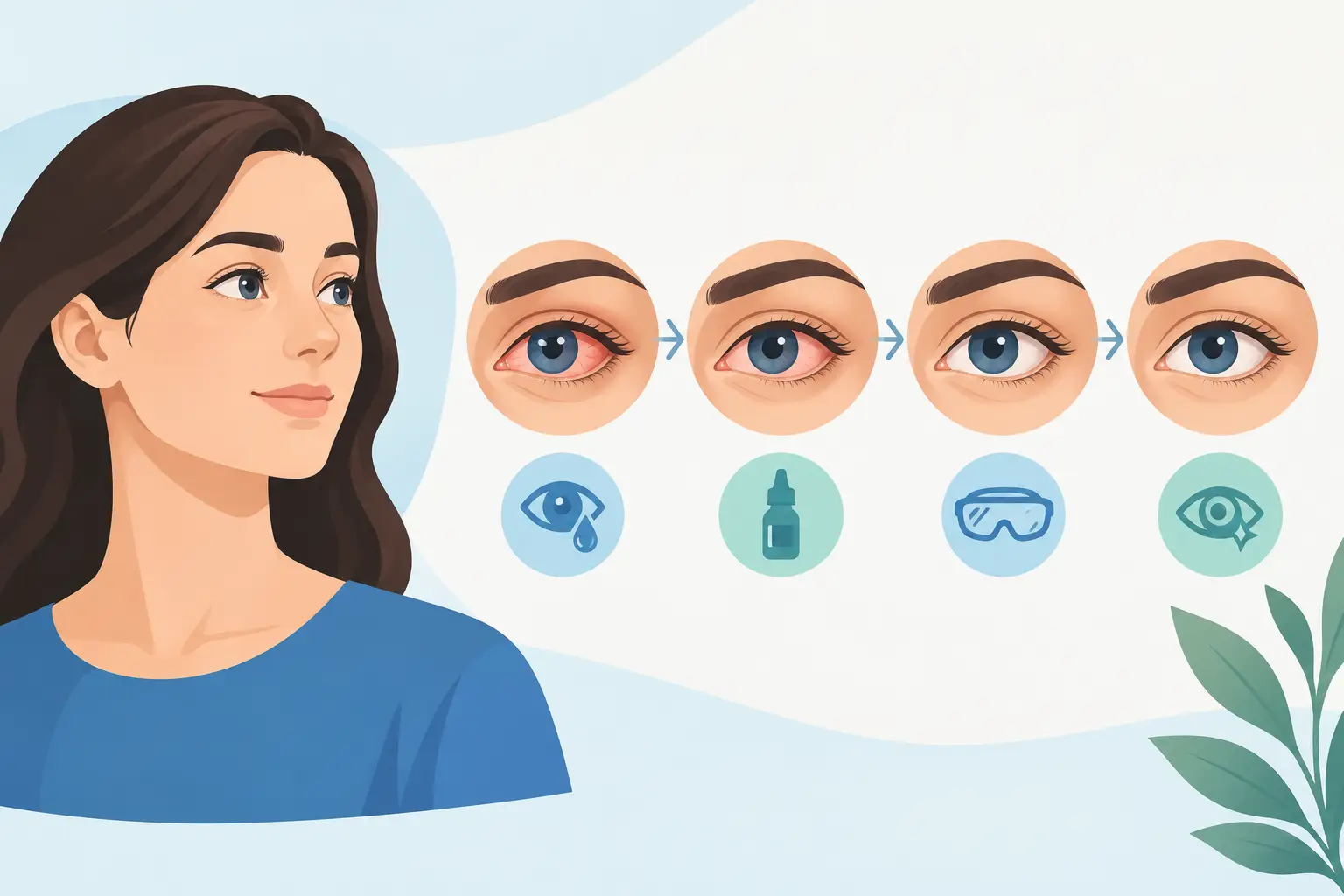
A scratched cornea can make even a quiet room feel painfully bright. The eye may sting, water constantly and feel as though there is sand trapped beneath the eyelid. This corneal abrasion recovery example shows what a typical healing pattern can look like, while also explaining why an eye injury should be assessed promptly rather than managed at home.
The cornea is the clear, protective front surface of the eye. It has many nerve endings, so even a small scratch can be very uncomfortable. Fortunately, minor abrasions often heal quickly with appropriate care. The key is confirming that it is truly a simple abrasion, as symptoms can overlap with a retained foreign body, infection, inflammation or a more serious eye injury.
What can cause a corneal abrasion?
A corneal abrasion may happen after dust, dirt, metal particles or an eyelash enters the eye. It can also occur from rubbing the eye, being scratched by a child or pet, contact lens problems, gardening, sport, or an accidental poke to the eye.
Contact lens wear deserves particular care. A scratch in a contact lens wearer carries a higher risk of bacterial infection, especially if lenses have been worn overnight, exposed to water or used beyond their recommended replacement schedule. Do not put a contact lens back in an injured eye until an optometrist or ophthalmologist has advised that it is safe.
Common symptoms include pain, redness, tearing, sensitivity to light, blurred vision and a gritty sensation. Some people find it difficult to keep the eye open. These symptoms may start immediately, but a foreign body caught under the upper lid can continue scratching the cornea each time you blink.
Corneal abrasion recovery example: what healing may look like
Every injury is different, but the following is an example of recovery after a small, uncomplicated corneal abrasion. It is not a substitute for an examination, particularly where vision has changed or pain is significant.
Day 0: the injury and assessment
A patient is gardening and feels soil blow into one eye. They rub it, then develop sharp pain, tearing and light sensitivity. Rinsing the eye with clean water may remove loose debris, but the discomfort continues.
At an urgent eye examination, the optometrist checks vision, examines the eyelids and looks for a foreign body. A yellow-orange dye called fluorescein can highlight a scratch under blue light. If a superficial abrasion is found and there are no signs of infection or deeper injury, treatment may include lubricating eye drops or ointment, pain relief advice and, where clinically indicated, antibiotic drops or ointment.
The patient is advised not to rub the eye, not to wear contact lenses, and to return promptly if symptoms worsen. Eye patching is generally not used for simple abrasions, as it does not reliably improve comfort or healing and may create other concerns.
The first 24 hours: discomfort should begin to ease
The first night is often the most uncomfortable. Light sensitivity and watering can persist, and vision may be mildly blurry from tearing or ointment. Resting the eye and avoiding bright light may help, but pain that is getting stronger rather than easing needs urgent review.
By the following day, a minor abrasion often feels noticeably better. The patient may still have a scratchy sensation, particularly on blinking, but can usually open the eye more easily. This improvement is encouraging, although it does not always mean the cornea is fully healed.
Days 2 to 3: surface healing
Small, uncomplicated scratches commonly heal within 24 to 72 hours because the corneal surface regenerates quickly. At this stage, redness and light sensitivity should be reducing. Vision should be returning towards normal, unless there is another issue such as dry eye, swelling, infection or a deeper scratch.
If drops or ointment have been prescribed, they should be used exactly as directed. Do not use leftover antibiotic drops from a previous infection, and avoid anaesthetic eye drops intended to numb the eye. While numbing drops can make an examination more comfortable, repeated use outside clinical supervision can delay healing and cause serious corneal damage.
Days 3 to 7: review where advised
Some patients need a follow-up examination, especially children, contact lens wearers, people with larger abrasions, or anyone whose symptoms have not settled as expected. The optometrist may repeat the fluorescein assessment to confirm the surface has healed and check that there is no infection or retained debris.
A person with a simple abrasion that has fully healed can usually return to normal activities. Contact lens wear should only resume once the eye is comfortable, vision is clear and the treating clinician has given approval. It is sensible to start with a fresh lens case and a new pair of lenses where possible, rather than reusing lenses worn at the time of the injury.
When recovery is not following the expected pattern
It depends on the size and cause of the scratch, but worsening symptoms are never something to watch for several more days. A corneal infection or ulcer can threaten sight and needs urgent treatment.
Arrange urgent eye care if there is increasing pain, worsening redness, discharge, reduced or hazy vision, severe light sensitivity, a white or grey spot on the cornea, or no clear improvement within 24 hours. The same applies if the injury involved metal, chemicals, high-speed machinery, a tree branch, or anything that may have penetrated the eye.
Chemical splashes are an immediate emergency. Flush the eye straight away with clean running water for at least 20 minutes, keeping the eyelids open as best you can, then seek urgent medical care. Do not delay flushing while looking for eye drops or trying to identify the chemical.
If there has been a forceful injury, such as an impact from a ball, tool or vehicle accident, the eye should also be assessed even if the pain seems mild. A corneal scratch may be only one part of the injury.
Practical care while the cornea heals
The aim is to protect the healing surface and avoid introducing infection. Wash hands before touching around the eye or using prescribed drops. Use clean tissues to gently dab tears, rather than rubbing. Sunglasses can make outdoor light more comfortable while sensitivity settles.
Avoid swimming pools, spas and eye makeup until you have been advised the eye has healed. For people who work in dusty environments or play sport, protective eyewear can reduce the chance of another injury. Well-fitting safety glasses are particularly valuable when mowing, grinding, drilling, gardening or working with chemicals.
It is also worth reviewing contact lens habits after an abrasion. Lenses should never be rinsed with tap water or saliva, and they should not be worn while sleeping unless specifically prescribed for overnight use. Good lens hygiene is a practical safeguard for your eye health.
Why an eye examination matters
A corneal abrasion is often described as a scratch on the eye, but an eye examination does more than confirm the scratch. It checks vision, identifies the location and size of the injury, turns the upper lid to look for hidden particles, and assesses whether the cornea shows early signs of infection.
For families, this is especially helpful with children who may not be able to explain what happened or describe changes in vision. Prompt assessment can provide reassurance when the injury is minor and timely treatment when it is not.
At Boda Family Eye Care, urgent eye concerns can be assessed with a thorough, patient-focused approach. If your eye is painful, light-sensitive or suddenly blurry after an injury, seek care on the same day. A healing cornea should feel progressively better, and when it does not, listening to that warning sign can protect your vision.